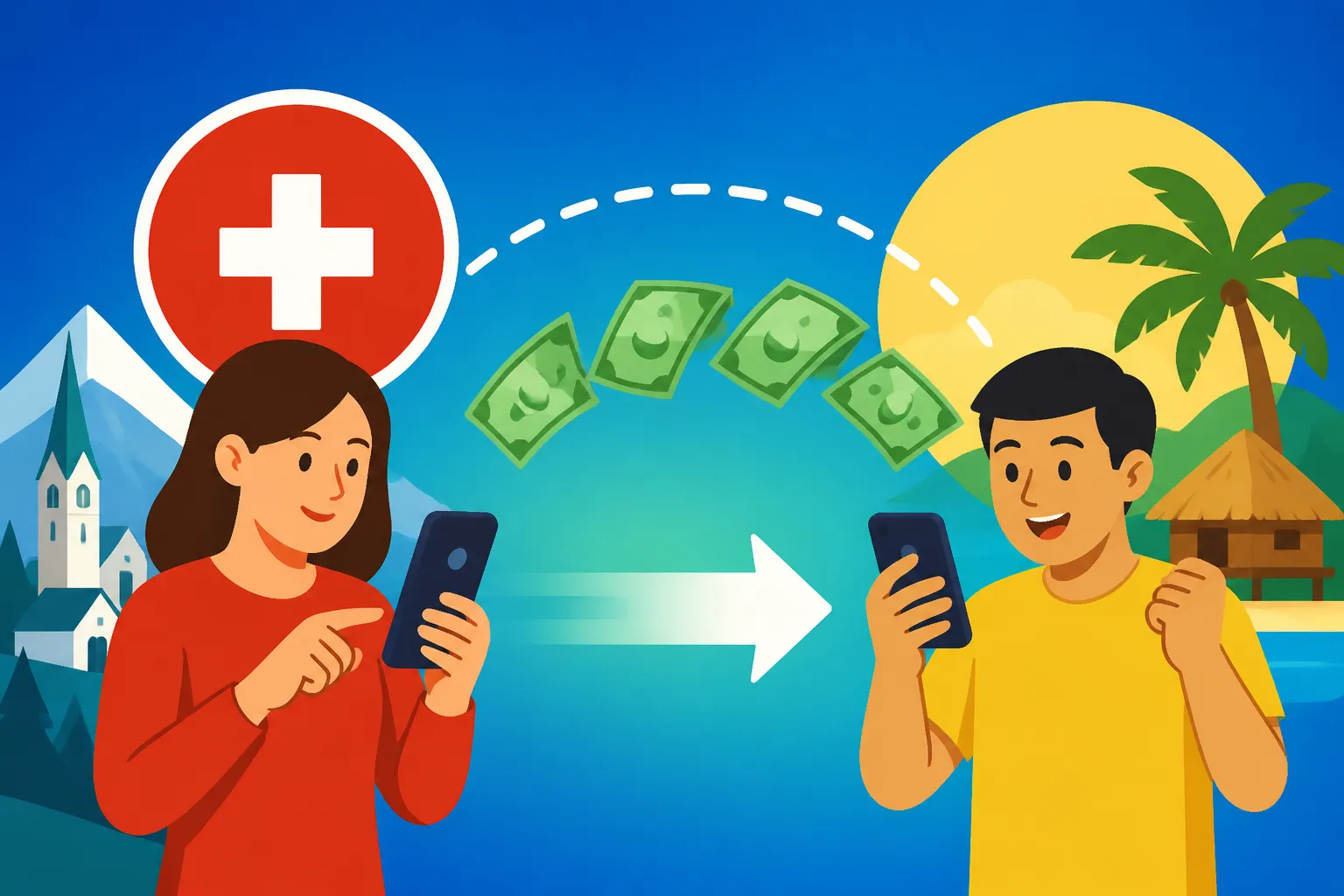
How to Send Money from Switzerland to the Philippines Cheaply
Sending money home is often the primary reason many of us endure the high-pressure environment of the Swiss workplace, yet the "Swiss tax" on remittances can be staggering. You work hard for your Swiss Francs, but between the exchange rate markups and hidden bank fees, a significant chunk of your support for family in the Philippines can vanish before it ever reaches Manila or Cebu. This guide breaks down the most cost-effective methods to ensure your loved ones receive every possible centavo.
Why Your Swiss Bank is Probably Ripping You Off
If you are still using your traditional Swiss bank account to send money to the Philippines, you are likely losing a small fortune every year. Most expats arrive and naturally think that a major institution like UBS, Credit Suisse (now part of UBS), or a Cantonal bank like ZKB is the safest bet for international transfers. While they are safe, they are also incredibly expensive. The problem isn't just the flat fee they charge for a global transfer—which can range from CHF 5 to CHF 25—but the "hidden" cost found in the exchange rate.
Banks do not use the mid-market rate, which is the real exchange rate you see on Google or XE. instead, they add a "spread" or a markup. For a transfer from CHF to PHP, this markup can easily be 3% to 5%. If you are sending CHF 1,000, the bank might be taking CHF 50 just through a poor exchange rate, on top of their standard transaction fee. Over a few years, this is enough money to have funded a major family event or a significant portion of a down payment back home.
Furthermore, traditional Swiss banks often use the SWIFT network, which involves "correspondent banks." These are middleman banks that sit between your Swiss account and the recipient bank in the Philippines, like BDO or BPI. Each of these middlemen can strip away a fee of $10 to $30 without warning. By the time the money lands in a Philippine account, it has been "clipped" multiple times. Understanding Banking and Finance for Expats in Switzerland: The 2027 Guide is crucial for realizing just how much these traditional structures can cost you over the long term.
Comparing Specialist Remittance Services and Neobanks
The landscape for moving money has changed drastically in the last few years, and as a veteran expat, I have seen the rise of digital-first solutions that make traditional banking look like a relic of the past. When sending money to the Philippines, you have three main categories of services: specialist remittance apps, neobanks, and traditional money transfer operators. Each has a different value proposition depending on whether you value speed, cost, or physical cash pickup.
The Transparency of Digital Disruptors
For most of us living here, Wise has become the go-to solution for a reason: transparency. Unlike a bank that hides its profit in a skewed exchange rate, Wise uses the real mid-market rate and charges a small, upfront fee. You see exactly how many Philippine Pesos will arrive before you hit "send." I have personally used Wise for everything from small monthly allowances for parents to larger transfers for property investments in the Philippines. The convenience of linking it directly to your Swiss bank account via a local transfer (SIT or QR-bill) means you aren't paying any extra domestic fees either.
The benefit of using Wise is that they have local accounts in both Switzerland and the Philippines. When you "send" money, you are actually just paying into their Swiss account, and they pay out of their Philippine account. This bypasses the entire SWIFT network and those pesky intermediary bank fees. It is often the absolute cheapest way to get money from a Swiss salary into a Philippine bank account. If you are just starting out, checking your Financial Checklist for Your First 30 Days as an Expat in Switzerland will show you that setting up a digital transfer service is just as important as getting your residence permit.
Neobanks and the Local Swiss Advantage
Lately, many of us have switched to Swiss neobanks for our daily spending. If you are using platforms like Neon or Yuh, you already have built-in international transfer capabilities. For example, Neon uses the Wise API directly within their app, meaning you get the same great rates without needing to open a separate account. This is a massive win for those who want to keep their financial life simple. You can read more about how these platforms compare in our guide on Best Neobanks in Switzerland: Neon, Yuh, and Zak Compared.
However, there is a nuance when sending to the Philippines. Some neobanks might have limits on specific currencies or higher fees for "exotic" routes. While the PHP is a major remittance currency, always check if the neobank is offering the mid-market rate or if they are adding their own small margin. Even a 0.5% difference can be significant when you are talking about the high Salary and Compensation: Navigating Swiss Pay, Bonuses, and Deductions typical of the Swiss tech or medical sectors.
Traditional Money Transfer Operators
Then there are the "old guard" services like Western Union or MoneyGram. For years, these were the only way to get cash to remote provinces where the recipient might not have a bank account. In 2026, their digital apps have become much more competitive with Wise, often offering "zero fee" first transfers to lure in new customers. The real advantage here is the payout flexibility. If your family needs to pick up cash at a Cebuana Lhuillier or a Palawan Pawnshop, these services are still king. Just be extremely careful with their exchange rates after the "promo period" ends, as they often revert to being quite expensive.
| Service Type | Exchange Rate | Typical Fees | Best For |
|---|---|---|---|
| Traditional Swiss Bank | 3% – 5% Markup | CHF 10 – 25 + SWIFT | Large, rare transfers to older institutions |
| Wise | Mid-Market (Real) | ~0.5% – 0.7% | Regular monthly remittances to bank accounts |
| Neon / Yuh | Mid-Market (via Wise) | Integrated Fee | Users who want everything in one Swiss app |
| Remitly / WorldRemit | Variable Markup | CHF 0 – 4.99 | Speed and mobile wallet (GCash/Maya) payouts |
| Western Union | Variable Markup | High for Cash | Cash pickup in remote provinces |
Tax Implications and Compliance for Remittances
One thing that many expats overlook when sending large sums of money home is the Swiss tax man. Switzerland has a very specific way of viewing your global assets. Even though you are sending money that has already been taxed at the source via Withholding Tax (Quellensteuer) vs Standard Taxation for Foreigners, the total amount you send and the assets you hold abroad still need to be accounted for.
Reporting Your Global Wealth
In Switzerland, you are taxed on your worldwide wealth. If you are sending CHF 2,000 every month to the Philippines to pay off a condominium in Makati, that condo is technically a global asset that should be declared on your Swiss tax return once you move to a C-permit or if you earn over a certain threshold. Using a service like Taxes for Expats can be a lifesaver here. They specialize in helping foreigners navigate the dual-reporting requirements that often arise when you have financial footprints in two different countries.
If the money you send is considered a "gift" to family members, there are usually no Swiss tax implications for the sender, provided it's coming from your post-tax income. However, if the amounts are very large (think six figures for a house), the canton might ask for clarification to ensure it isn't an attempt to hide wealth. Taxes for Expats can help you document these transfers correctly so they don't trigger an unnecessary audit. This is especially important if you are trying to manage your Cost of Living in Switzerland 2026: Budgeting for Singles and Families while also building a future back home.
Compliance and Anti-Money Laundering (AML)
Be prepared for the occasional "Source of Wealth" check. Because Switzerland and the Philippines are both part of global efforts to curb money laundering, sending a large, one-off sum—say, CHF 50,000—will almost certainly trigger a flag. Your bank or transfer service like Wise will ask for a copy of your Swiss payslip or a contract of sale. Don't be offended; it’s a standard procedure. Keeping your Understanding Swiss Payslips: Deductions for AHV, ALV, and NBU records organized will make this process much smoother.
Taxes for Expats often advises their clients to keep a clear paper trail of all remittances. If you are ever questioned about where your money went, having a tidy folder of Wise or bank confirmation PDFs is much better than trying to reconstruct your history from memory. This level of organization is the difference between a stress-free residency and a bureaucratic nightmare.
Practical Steps to Maximize Your Transfer
If you want to get the absolute most PHP for your CHF, you need a strategy. You shouldn't just send money the day your salary hits your account. Timing and method matter more than you think.
Choose the Right Payout Method
In the Philippines, the "payout" method dictates the speed and often the cost.
- Bank Deposits: Usually take 1-2 business days. Best for large sums where safety is the priority.
- Mobile Wallets (GCash/Maya): Almost instant. This is the preferred method for the younger generation in the Philippines. Most digital services like Wise or Remitly offer direct-to-GCash transfers, which are often the cheapest because they avoid Philippine bank processing fees.
- Cash Pickup: Instant but expensive. Only use this if the recipient has no other choice.
Avoid Weekend Transfers
The foreign exchange market closes on the weekends. If you send money on a Saturday, many services will add a "weekend markup" to protect themselves against the market opening at a different rate on Monday. Whenever possible, set up your transfers for Tuesday, Wednesday, or Thursday. This ensures you are getting a live, competitive rate and that the banks on both ends are open to process the transaction.
If you are using a neobank as described in our guide on Cheapest Ways to Transfer CHF Abroad: Wise vs Revolut vs Swiss Banks, you can often set "price alerts." This allows you to wait for the CHF to strengthen against the PHP before pulling the trigger. Even a small move from 63.50 to 64.10 PHP per Franc can buy a lot of extra groceries for your family.
Disclaimer
The information provided in this article is for informational purposes only and does not constitute financial, legal, or tax advice. Exchange rates, service fees, and regulations regarding international money transfers and Swiss taxation are subject to frequent changes. Always conduct your own research and consult with a qualified professional, such as a tax advisor from Taxes for Expats or a certified financial planner, before making significant financial decisions. All mentions of brands are based on current market reputation and should be verified by the user at the time of transaction.