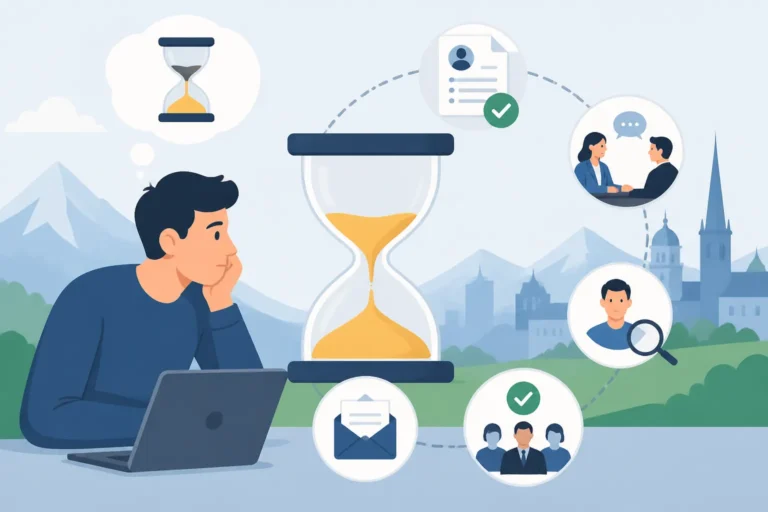
Returning to Work After Maternity Leave in Switzerland: Your Rights
Returning to work after welcoming a new addition to your family in Switzerland can feel like stepping onto a different planet, especially for expats still trying to decode the intricate Swiss system. You've navigated the joys and sleepless nights of new parenthood, and now you’re facing the equally daunting task of understanding your rights and options for returning to the workplace. This guide is here to shed light on exactly what you can expect, outlining your legal entitlements, practical considerations, and tips for making that transition back to your career as smooth as possible in this unique country.
Understanding Your Legal Rights After Maternity Leave in Switzerland
Switzerland, while known for its efficiency, has specific, sometimes rigid, rules around maternity leave that every expat parent needs to grasp. It’s not always as generous as some other European countries, but there are clear protections in place designed to support new mothers. Knowing these ins and outs is your first line of defense against misunderstandings and ensures you can advocate for yourself effectively.
Federal Protection: Maternity Leave Duration and Pay
Federally mandated maternity leave in Switzerland (Mutterschaftsentschädigung / Allocation de maternité) guarantees mothers a minimum of 14 weeks (98 days) of leave following childbirth. This is a non-negotiable right, and employers cannot force you back to work before this period is over. During this time, you are entitled to 80% of your average earnings, up to a maximum daily allowance. For 2026, this daily maximum is set at CHF 220, meaning the highest monthly payout you can receive is around CHF 6,600, regardless of how high your actual salary was.
This payment typically comes from the social security system (AHV/IV/EO), not directly from your employer, although many progressive Swiss companies will top up the 80% to 100% of your full salary for the duration of the 14 weeks. It's crucial to check your employment contract or company policy for these details. If your employer offers a top-up, it’s a benefit, not a legal requirement. The calculation of your average earnings is usually based on the income you received before you went on leave, considering any bonuses or irregular payments that are part of your regular remuneration. It’s important to understand the specifics of Maternity Pay in Switzerland: Calculating Your 80% Income Replacement to ensure you're receiving your full entitlement.
It's worth noting that this 14-week period is a minimum. Some cantons might offer slightly longer periods, but the federal law sets the baseline. For expat parents, this can sometimes be a rude awakening, especially if you come from countries with 6, 9, or even 12 months of paid leave. The system here is built on a different philosophy, and while it provides a solid foundation, it often requires additional personal planning.
Job Security and Non-Discrimination
One of the most reassuring aspects of Swiss maternity law is the strong protection against dismissal. During your pregnancy and for the entire 16 weeks after childbirth (which extends beyond the 14 weeks of paid leave), your employer cannot legally terminate your employment. This protection is robust, designed to give new mothers peace of mind as they recover and bond with their newborns. Even if your fixed-term contract is due to expire during this protected period, it will typically be extended until the end of the protection period.
However, once this protection period ends, the standard notice periods in your contract apply. While direct dismissal because you had a baby is considered discriminatory, proving this can be challenging. Swiss law generally protects against unfair dismissal, but it’s not as strict as some other jurisdictions. If you suspect discrimination upon your return, it’s vital to document everything and seek advice, perhaps from a legal aid service or The ASLOCA / Mieterverband: Why Every Swiss Tenant Must Join (which, despite its name, also offers general legal advice for workers).
You also have the right to return to your same position or an equivalent one, with the same responsibilities and salary. Your employer cannot demote you or significantly alter your terms of employment without your consent. Any changes proposed should be carefully reviewed, and if they feel unfair or like a thinly veiled demotion, you have grounds to challenge them. This also includes ensuring your pension contributions continue uninterrupted during your leave, or that any gaps are clearly explained and mitigated. For complex scenarios involving changes in employment terms or potential discrimination, consulting a professional for specific advice is highly recommended. Dealing with this in a foreign language can be incredibly stressful, so don't hesitate to leverage resources.
Flexible Work Arrangements and Breastfeeding Breaks
The modern workplace increasingly recognizes the need for flexibility, and Swiss law offers some protections. While there's no automatic right to reduce your working hours after maternity leave, you do have a legal right to take paid breastfeeding breaks if you choose to continue nursing. Pumping at Work in Switzerland: Legal Breaks for Breastfeeding Mothers outlines these rights in detail:
- For a workday up to 4 hours, you get 30 minutes of paid break.
- For a workday over 4 hours and up to 7 hours, you get 60 minutes of paid break.
- For a workday over 7 hours, you get 90 minutes of paid break.
These breaks must be provided by your employer and are counted as working time, meaning they are paid. They must also offer a suitable space for breastfeeding or pumping, which is often easier said than done in smaller offices. It’s important to communicate your intentions to your employer in advance so they can make the necessary arrangements.
Regarding reducing your workload or requesting different working hours, this falls outside the federally mandated maternity leave protections. However, many Swiss companies are open to Working Models: Part-Time Percentages (e.g., 80% Workload) Explained, especially in larger, more international corporations. It’s something you need to negotiate directly with your employer. Be prepared to present a strong case for how a reduced schedule can still benefit the company and discuss the impact on your career progression. The Swiss corporate culture, while changing, can still be quite traditional regarding full-time commitment, but advocacy and negotiation can yield positive results. Having a clear plan and understanding what you want is key.
Navigating the Practicalities of Your Return
Beyond the legal framework, the day-to-day realities of returning to work can be the most challenging. From finding childcare to managing finances, these practical hurdles often feel magnified when you’re also adjusting to life in a new country.
Communication with Your Employer
Open and timely communication is paramount when preparing to return from maternity leave. Don’t wait until the last minute. Around three to four months before your intended return, initiate a conversation with your manager and HR department. This gives everyone ample time to plan.
Key discussion points should include:
- Your exact return date: Confirm this well in advance.
- Desired working hours: If you wish to return part-time (e.g., 80% or 60%), propose this clearly, outlining your preferred schedule. Be ready to discuss how you'll manage your responsibilities within those hours.
- Childcare arrangements: While not strictly your employer’s business, it’s good to have your childcare plan in place, as it reassures them of your readiness to resume duties.
- Breastfeeding breaks: Inform them of your intention to take these if applicable.
- Flexible working requests: If you're hoping for hybrid work or adjusted start/end times, this is the time to negotiate.
A proactive approach demonstrates professionalism and allows your employer to plan for your reintegration, whether it means backfilling your role temporarily or adjusting team responsibilities. Swiss employers value predictability and clear communication, so avoiding last-minute surprises is always a good strategy.
Childcare Solutions and Their Costs
Let's be blunt: childcare in Switzerland is astonishingly expensive, often a major shock for expat families. It's not uncommon for full-time daycare (Kita/Crèche) for one child to cost anywhere from CHF 2,000 to CHF 3,500 per month, depending on the canton and city. This can easily eat up a significant portion of a parent’s salary, making the financial viability of returning to work a very real consideration. Understanding Childcare Costs in Switzerland: Daycare (Kita) Prices by Canton is crucial for your family budget.
Options generally include:
- Kitas/Crèches (Daycares): These are regulated centers, offering care for babies from around 3-4 months old. Demand often outstrips supply, especially in major cities like Zurich, Geneva, or Basel, so you need to register early – sometimes even during pregnancy. Waiting lists can be long.
- Tagesmutter (Day Mother/Nanny): A licensed individual who cares for a small group of children in her own home. This can offer a more home-like environment and often slightly more flexibility. Costs are comparable to Kitas.
- Nanny/Au Pair: Hiring private in-home help offers the most flexibility but is also the most expensive option. Au pairs are typically younger, live with the family, and have cultural exchange as part of their experience, often at a lower cost than a professional nanny.
- Family/Friends: If you have family nearby or a strong network, this can be a lifeline.
It’s essential to research your local options as soon as possible. Some cantons and municipalities offer subsidies (KiTa Beiträge / Subventions crèches) for low to middle-income families, but these are income-tested and don't usually cover the full cost. Don't forget that these costs can sometimes be partially offset through Tax Deductions for Families in Switzerland: Childcare and Dependent Allowances when you file your annual tax return. Planning this aspect well in advance is not just advisable, it's a necessity.
The Financial Impact: Salary, Taxes, and Benefits
Returning to work, especially if you opt for a reduced schedule, will naturally impact your household finances. Your salary will be adjusted to your new working percentage.
Regarding taxes, your maternity benefits themselves are generally subject to social security contributions and taxes, so don't expect the gross amount to be entirely tax-free. When you return to work, your income tax (whether through Withholding Tax (Quellensteuer) vs Standard Taxation for Foreigners or regular filing) will resume based on your new salary. It's often helpful to speak to a financial advisor or a service like Taxes for Expats to understand the full implications, especially if your income or working percentage changes significantly. They can help you navigate how your maternity benefits, potential part-time income, and existing tax deductions like Pillar 3a in 2026: Tax Deductions, Limits, and Investment Options interact.
Also, consider your pension contributions (Pillar 2, BVG). If you reduce your working hours, your pension contributions will also decrease proportionally, which can affect your retirement savings in the long run. If your employer contributed to a private sickness benefits insurance (Krankentaggeldversicherung or KTG) that topped up your maternity pay, this would cease upon your return.
On the flip side, don't forget about Child Benefit Payments (Kinderzulage) and Their Tax Implications. These are regular payments from the government to parents, and they continue regardless of your working status, though the exact amount can vary by canton and employer. These aren't huge, but every bit helps with those childcare costs!
Re-integrating and Thriving Back in the Workplace
The return to work isn't just about the logistics; it's also a significant psychological and emotional adjustment. You're balancing the demands of your career with the immense responsibility of parenthood, all while navigating a foreign culture.
Managing Work-Life Balance as a New Parent
This is arguably the toughest part. Swiss corporate culture, as discussed in The Swiss Corporate Culture: Meetings, Hierarchy, and Professional Etiquette, often emphasizes efficiency and a strong work ethic. Finding that elusive "balance" will be an ongoing challenge. Be realistic with yourself and your employer. You might not be able to put in the same long hours or attend every after-work Apéro initially.
Tips for managing:
- Set boundaries: Be clear about your working hours, especially if you're part-time. Stick to them.
- Prioritize ruthlessly: Focus on the most important tasks and learn to delegate or say no when necessary.
- Leverage technology: Use your calendar and communication tools effectively to manage your time.
- Be kind to yourself: There will be days when you feel like you're failing at everything. It’s normal. Celebrate small wins and remember that you’re doing your best.
- Utilize your full leave: If you have extra vacation days saved up, consider using them to ease back into work gradually or for buffer days during the initial transition.
Many expat parents find themselves grappling with guilt – whether it’s not spending enough time with their child or not being as "on" at work as they used to be. It's a universal struggle, but in Switzerland, with its high cost of living and specific social norms, it can feel particularly isolating. Connect with other expat parents; their shared experiences can be incredibly validating.
Upskilling and Language for Career Progression
Even with the best intentions, maternity leave can feel like a pause in your career progression. Staying relevant and continuously developing your skills is crucial, especially in Switzerland's competitive job market. Consider online courses, industry certifications, or even just keeping up with industry news.
For expats, language proficiency is often the biggest hurdle to long-term career success. If you're in a German, French, or Italian-speaking canton, improving your local language skills will open up more opportunities and help you integrate better into the workplace and broader society. Even if your workplace language is English, being able to communicate with colleagues or clients in their native tongue shows initiative and commitment. Platforms like iTalki can be fantastic for fitting language lessons into a busy schedule, allowing you to practice with native speakers from the comfort of your home, even during nap times or after the little one is asleep. It makes a huge difference in navigating day-to-day work life and understanding all the subtle nuances. You can find useful insights into what employers expect in terms of Language Skills for the Workplace: German, French, and English Demands.
Building a Support Network
Expat life combined with new parenthood can be incredibly isolating. You might be far from family support, and your existing social circle may not fully understand the unique challenges you face. Proactively building a support network is not just a nice-to-have, it’s a necessity.
- Expat parent groups: Look for local expat groups on social media (Facebook, Meetup) specifically for parents. These are invaluable for sharing tips, frustrations, and finding solidarity.
- Professional networks: Reconnect with colleagues, attend industry events if possible, and maintain your professional contacts. LinkedIn is a powerful tool for this.
- Local clubs (Vereine): Engaging with local community clubs, even if it’s just a parenting group at the Mütter- und Väterberatung (mother and father advisory service), can help you feel more rooted in your new home.
- Friends and family (even remotely): Don't underestimate the power of video calls with loved ones back home.
Having people you can lean on, whether for practical help (like a babysitter you trust) or just for a vent session, will significantly reduce stress and help you maintain your well-being as you juggle work and family life.
| Aspect | Swiss Federal Minimum | Common Employer Practice (Check Contract!) | Key Considerations for Expats |
|---|---|---|---|
| Maternity Leave Duration | 14 weeks (98 days) post-childbirth | Some companies offer longer, but 14 weeks is standard for paid leave. | Significantly shorter than many other expat home countries; plan for early return or unpaid leave. |
| Maternity Pay | 80% of average earnings, max CHF 220/day (approx. CHF 6,600/month) | Many progressive companies top up to 100% of salary. | Taxable income; impacts budget planning due to cap. Confirm if employer offers 100% top-up. |
| Job Protection | Cannot be dismissed during pregnancy and for 16 weeks post-childbirth | High protection during this period. | Ensure you understand when the protection ends and what your notice period is afterward. |
| Breastfeeding Breaks | Legally mandated paid breaks (30-90 mins/day depending on hours) for up to 1 year of age | Employer must provide suitable space and time. | Communicate needs clearly in advance. Space might be basic in smaller offices. |
| Flexible Work/Part-time | No legal right to reduced hours post-leave | Negotiable, more common in larger, international companies. Often requires strong case. | Essential to discuss with employer early; impacts salary, pension, and career progression. |
| Childcare | No federal right to subsidized childcare | Some employers offer subsidies or internal childcare (rare). | Extremely expensive (CHF 2,000-3,500/month for Kita); register very early. Factor into financial planning immediately. |
| Pension Contributions (BVG) | Continues as per earned income; 80% contribution on 80% pay | If salary topped up to 100%, BVG contributions might also be at 100% (check). | Reduced work percentage means reduced contributions; long-term retirement planning impact. |
| Language | No specific legal requirement for return | Essential for career progression and integration in local language regions. | Improving local language skills (e.g., via iTalki) is crucial for navigating work and life nuances. |
In the end, returning to work after maternity leave in Switzerland as an expat is a multi-faceted journey that requires careful planning, a solid understanding of your rights, and a good dose of resilience. You’re not just going back to work; you’re navigating a new phase of life in a new cultural context. Give yourself grace, lean on your support networks, and don’t be afraid to ask for what you need.
Disclaimer
The information provided in this guide is for general informational purposes only and does not constitute legal, financial, or professional advice. While we strive to keep the information up-to-date and correct, laws and regulations in Switzerland are subject to change and vary by canton. You should consult with a qualified legal or financial professional for advice tailored to your specific situation.