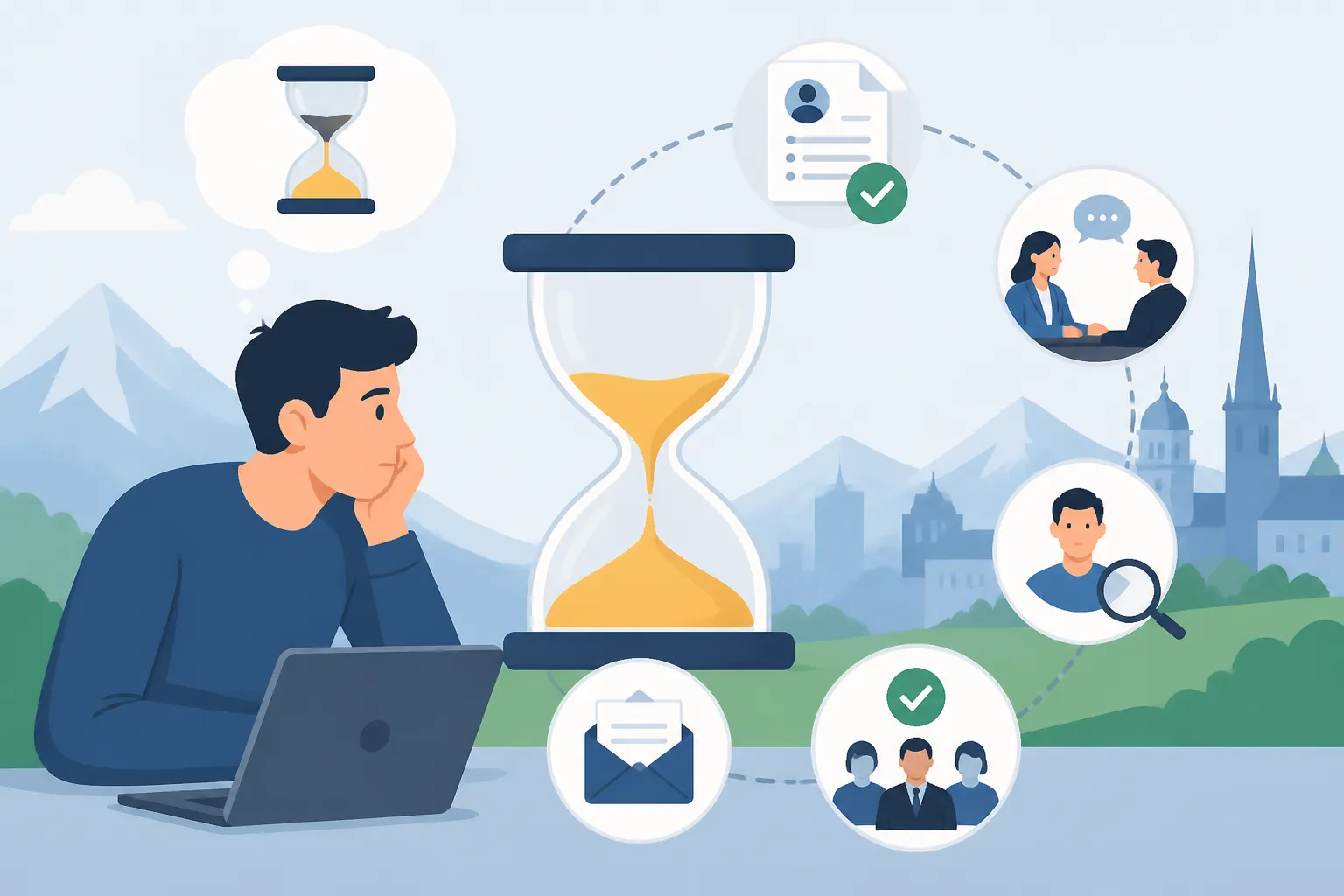
Why Swiss Job Applications Take So Long: Typical Hiring Timelines
Oh, the Swiss job application journey! It's a rite of passage for many expats, often leaving us scratching our heads and wondering if our application documents have simply been swallowed by a black hole somewhere in the Alps. If you’re feeling an almost Zen-like patience developing or, conversely, a gnawing anxiety, you’re not alone. This guide is here to unravel the mysteries behind why Swiss job applications often take what feels like an eternity, detailing the typical hiring timelines you can expect and offering some seasoned advice on how to navigate this uniquely Swiss process without losing your mind.
The Swiss Pace: A Culture of Deliberation
Coming from a culture where hiring processes can be lightning-fast – sometimes you apply on Monday and have an offer by Friday – the Swiss approach can feel like moving in slow motion. But trust me, there's a method to the seeming madness. It's not about inefficiency; it's about a deeply ingrained cultural value of thoroughness and risk aversion.
The "Measure Twice, Cut Once" Mentality
Swiss companies, regardless of size, tend to adopt a "measure twice, cut once" philosophy, especially when it comes to hiring. This isn't just a quaint saying; it's a fundamental aspect of their business culture. Every candidate is meticulously evaluated, often against a very precise and unyielding set of criteria. They're not just looking for someone who can do the job; they're looking for the perfect fit, someone who will integrate seamlessly into the team and stay for the long haul. This comprehensive approach means they'll scrutinize your CV, your cover letter, and every single certificate or reference you provide. They often prefer to verify every detail rather than make a quick, potentially flawed decision.
This thoroughness extends to every step of the process. Imagine the HR department, the hiring manager, and even key team members all needing to review your application independently before it progresses. Each person takes their time, knowing that a hasty decision could cost the company significantly, not just in terms of salary but in time, training, and team dynamics. This isn't a culture that rewards quick fixes; it values precision and stability above all else. So, while you're waiting, try to reframe it: they're not ignoring you, they're simply being Swiss.
Consensus and Due Diligence
Another significant factor contributing to the extended timelines is the emphasis on consensus-building. In many Swiss organizations, major decisions, including hiring, often involve multiple stakeholders. It's not uncommon for a hiring panel to include representatives from HR, the specific department, a works council (if applicable), and even senior management, especially for more critical roles. Each of these individuals needs to weigh in, provide feedback, and ultimately agree on the chosen candidate.
This multi-party approval process can add weeks, if not months, to the timeline. Scheduling meetings with busy executives, collecting all the feedback, and then holding further discussions to iron out any discrepancies all take time. Furthermore, Swiss companies are incredibly diligent about their legal obligations and internal policies. They conduct extensive due diligence to ensure that a candidate meets all the requirements, especially for roles that might involve work permit sponsorship for third-country nationals. This deep dive into compliance means that background checks, verification of qualifications, and even assessing a candidate's broader suitability for the country can be extensive.
Navigating the Multi-Stage Gauntlet
Swiss hiring processes are rarely a one-and-done deal. Prepare for a series of distinct stages, each with its own waiting period and requirements. Understanding these steps can help you manage your expectations.
Initial Application and Screening
The journey typically begins with your initial application. This isn't just a quick upload of your CV. You’ll often need to provide a very detailed application dossier, sometimes including copies of diplomas, reference letters (Arbeitszeugnisse are crucial here!), and even proof of language proficiency. If you haven't already, you might want to read up on Writing a Swiss CV: Formats, Photos, and Professional Norms to ensure yours is impeccably tailored.
Once submitted, your application enters the screening phase. This can take anywhere from a few days to several weeks. HR departments in Switzerland are notoriously meticulous. They’re not just skimming keywords; they are carefully comparing your profile against the very specific job description. If your application doesn't align perfectly, or if a crucial document is missing, it might be filtered out early. Don't be surprised if the silence lasts longer than you'd expect. Sometimes, you might even get a polite email acknowledging receipt but then hear nothing for weeks while they silently process hundreds of applications.
The Interview Rounds: Expect Several Steps
If you make it past the initial screening, congratulations – you’ve entered the interview gauntlet! Unlike some countries where you might have one or two interviews, in Switzerland, it's common to have three, four, or even more rounds. These rounds typically escalate in seniority and focus.
- HR Interview (Initial Screening Call): Often a short phone or video call to assess basic fit, salary expectations, and language skills. They're checking if you understood the job description and if your expectations align with what they offer. This can be surprisingly detailed.
- Hiring Manager Interview: This is where the technical and role-specific questions come in. You'll likely dive deep into your experience and how it relates to the team's needs. This is also your chance to assess the team culture.
- Team Member Interviews: Many Swiss companies include interviews with potential colleagues. This isn't just a formality; they're looking for team fit and chemistry. Expect questions about collaboration, problem-solving within a team, and how you handle conflict.
- Senior Management/Director Interview: For higher-level roles, you’ll meet with department heads or even C-suite executives. This round focuses on strategic alignment, leadership potential, and your long-term vision.
- Assessment Centers/Case Studies: Especially for analytical or consulting roles, you might be invited to an assessment center, which can last a full day and involve presentations, group exercises, and in-depth case studies.
Each of these rounds is usually followed by another waiting period. It's a test of patience, but also an opportunity for you to gather more information about the company. For more tips on how to prepare, check out Interviewing in Switzerland: Typical Questions and Cultural Expectations.
Reference Checks and Background Verifications
Once you’ve cleared the various interview rounds, the company will typically move on to reference checks. In Switzerland, this isn’t just a quick call to one former manager. They take references very seriously, often contacting several individuals you’ve listed and sometimes even those you haven't, if they are publicly available (e.g., from your LinkedIn profile).
The Arbeitszeugnis (reference letter) from previous Swiss employers is paramount. These documents are standardized and contain coded language that Swiss HR professionals can "decode" to understand a former employee's true performance and conduct. If you're coming from abroad, they might ask for detailed contact information for your former supervisors and might even ask you to translate any non-German/French/Italian reference letters into one of the local languages. This phase can take considerable time, as they're working around people's schedules and ensuring they get comprehensive feedback. They’re really digging deep to ensure you are who you say you are and that your past performance aligns with their expectations. Don't be surprised if this takes another 2-3 weeks on its own.
The Offer and Contract Phase
Finally, after what feels like an eternity, you might receive an offer! But even then, the process isn't over. The contract negotiation and signing phase also adhere to the "Swiss pace." Offers are often comprehensive, detailing salary, benefits, holiday allowances, and notice periods. Understanding The Swiss Work Contracts and Labor Law: Notice Periods, Leave, and Rights is incredibly helpful here.
For non-EU/EFTA candidates, there's an added layer of complexity: work permit processing. Even after an offer is extended, the company needs to apply for your permit. This involves a quota system and approval from various cantonal and federal authorities. This alone can add several weeks or even months to your start date, as the cantonal migration office and the State Secretariat for Migration (SEM) review the application. It's why roles requiring a The Swiss B Permit: Eligibility, Renewal, and Restrictions often have longer hiring timelines overall. This is where you might start thinking about your financial situation, and perhaps looking into resources like Taxes for Expats to get an idea of your future financial obligations once you start working and earning a Swiss salary.
Factors Influencing Your Timeline
Beyond the cultural aspects, several practical factors can significantly impact how long your Swiss job application takes.
Industry and Company Size
The industry you're applying in plays a huge role. For instance:
- Finance and Pharma: Large, multinational companies in these sectors (especially in Zurich or Basel) often have highly structured, bureaucratic hiring processes that involve global compliance checks. They might move slower due to their sheer size and internal protocols, but also because they attract a very high volume of applications.
- Tech Startups: While still in Switzerland, some faster-paced tech startups might have slightly quicker turnaround times, mimicking a more international style. However, even they eventually hit the Swiss-specific checks.
- Public Sector/NGOs: Governmental roles or positions in international organizations (especially in Geneva) can have some of the longest timelines due to complex internal guidelines, public tendering processes, and extensive background checks, particularly for security clearances.
Smaller Swiss SMEs might seem quicker, but they often have fewer HR resources, meaning the hiring manager themselves might be juggling recruitment with their regular duties, which can also lead to delays.
Permit Quotas and Visa Sponsorship
For those without EU/EFTA citizenship, permit quotas are a major bottleneck. Switzerland sets annual quotas for work permits for third-country nationals, which are then distributed to the cantons. If a canton's quota for the year is low or already depleted, even a perfect candidate might face delays or outright rejection, regardless of how quickly the company wants to hire them. This is especially true for roles that don't fall into the "highly specialized" category.
Companies have to justify extensively why they need to hire a non-EU/EFTA candidate over a Swiss or EU/EFTA citizen (the Inländervorrang principle). This involves demonstrating a thorough search within Switzerland and the EU, which adds significant time to the process. If you're looking into roles that require sponsorship, be prepared for a longer wait.
Language Proficiency and Cultural Fit
While many international companies operate in English, the local language (German, French, or Italian) is almost always a plus, and often a requirement, especially for roles that involve significant interaction with local teams or clients. If you're applying for a role that doesn't strictly require a local language, but you show initiative in learning (e.g., mentioning you're taking lessons or using platforms like iTalki), it can subtly improve your chances, though it won't necessarily speed up the administrative process. However, if the job description does demand B2 German or C1 French, and you don't explicitly demonstrate it, your application might be slow-walked or rejected early on.
Beyond language, cultural fit is paramount. Swiss hiring managers are often looking for candidates who demonstrate qualities like reliability, punctuality, precision, and discretion. They want to ensure you'll integrate well into their existing team dynamics, which can be quite different from what you're used to. This "soft skill" assessment happens throughout all interview stages and contributes to the deliberate pace.
Time of Year and Internal Bureaucracy
Just like anywhere else, the time of year can affect hiring speed. The summer holidays (July/August) and the Christmas/New Year period are notorious for slowing things down significantly. Key decision-makers might be on vacation, making scheduling interviews or getting approvals nearly impossible.
Moreover, the internal bureaucratic structure of many Swiss companies can introduce delays. Each step often requires multiple sign-offs, and these internal processes are designed for thoroughness rather than speed. This can mean your application sits in an "awaiting approval" queue for longer than you'd imagine, even if everyone involved is positive about you. It's just how the system works.
Strategies to Cope and Keep Moving Forward
Waiting is hard, especially when your future feels uncertain. But there are proactive steps you can take to stay sane and keep your job search moving.
Follow-Up Etiquette (and When Not To)
This is a delicate dance in Switzerland. While you definitely want to show continued interest, over-eagerness can sometimes backfire. A polite, brief follow-up email after an interview (within 24-48 hours) is generally appreciated. However, constant calls or emails if you haven't heard back after a promised timeline (e.g., "we'll get back to you in two weeks") can be seen as impatient or even demanding.
If the stated timeline passes, it's acceptable to send one polite follow-up email asking for an update, perhaps a week after their stated deadline. Keep it professional, brief, and understanding of their process. Avoid sounding accusatory. If they don't respond to that, it might be a sign to move on, or that the process is simply moving at an internal pace you can't influence. Remember, silence doesn't always mean rejection, but it can often mean "still processing," which is a unique kind of torture!
Continuous Skill Development
While you're waiting, don't just twiddle your thumbs! Use this time wisely. If the job you applied for requires specific software, brush up on it. If language skills are a factor, double down on your lessons. As mentioned earlier, resources like iTalki can be fantastic for connecting with native speakers for conversation practice, even for a few minutes a day. This not only keeps your skills sharp but also demonstrates initiative if you're asked about what you've been doing.
Consider also exploring other areas of professional growth. Perhaps you could get a certification in a relevant area, or even start networking more actively. Look into local expat groups or professional meetups in your field. This continued engagement makes you a stronger candidate for this role or others, and helps take your mind off the waiting game.
Managing Expectations and Mental Well-being
Perhaps the most crucial strategy is managing your own expectations. Understand that a typical Swiss hiring timeline can range from 2-3 months to 6 months or even more, especially for complex roles or those requiring permits.
Here's a general table of what to expect:
| Stage | Typical Duration | Notes |
|---|---|---|
| Application & Initial Screening | 2-6 weeks | Highly variable depending on applicant volume and HR resources. |
| Interview Rounds (2-4+) | 4-12 weeks | Each round requires scheduling and internal feedback. |
| Reference Checks & Background | 2-4 weeks | Thorough, often involves multiple contacts and verification of documents. |
| Offer & Contract Negotiation | 1-3 weeks | Legal review and specific terms. |
| Work Permit Processing (Non-EU) | 4-12 weeks (after offer) | Can vary significantly by canton and complexity of the role. |
| Total Timeline (Estimate) | 3-9 months (or more for TCNs) | This is a realistic timeframe for many professional roles in Switzerland. |
Don't put all your eggs in one basket. Continue applying for other positions, even if you feel strongly about one particular role. It helps to maintain momentum and gives you alternatives. If the waiting is getting to you, don't hesitate to reach out for support. Expat life has its challenges, and dealing with prolonged job searches can be incredibly stressful. You might find it helpful to connect with English-Speaking Therapists: Counseling and Psychological Support Directories if the stress becomes overwhelming. Remember, your mental health is paramount throughout this process.
Keep learning about the Swiss work environment by exploring articles like The Swiss Corporate Culture: Meetings, Hierarchy, and Professional Etiquette or diving into specifics like Using LinkedIn Effectively for the Swiss Job Market. The more informed you are, the better prepared you'll be when the opportunity finally comes knocking. And it will. Just at the Swiss pace.
Disclaimer
Please remember that this guide provides general information and typical timelines. Individual experiences may vary significantly based on the specific company, industry, role, and your personal circumstances. Always consult official sources and legal professionals for advice tailored to your situation, especially regarding visa and permit processes, as regulations can change.