Getting Your Foreign University Degree Recognized in Switzerland (swissuniversities)
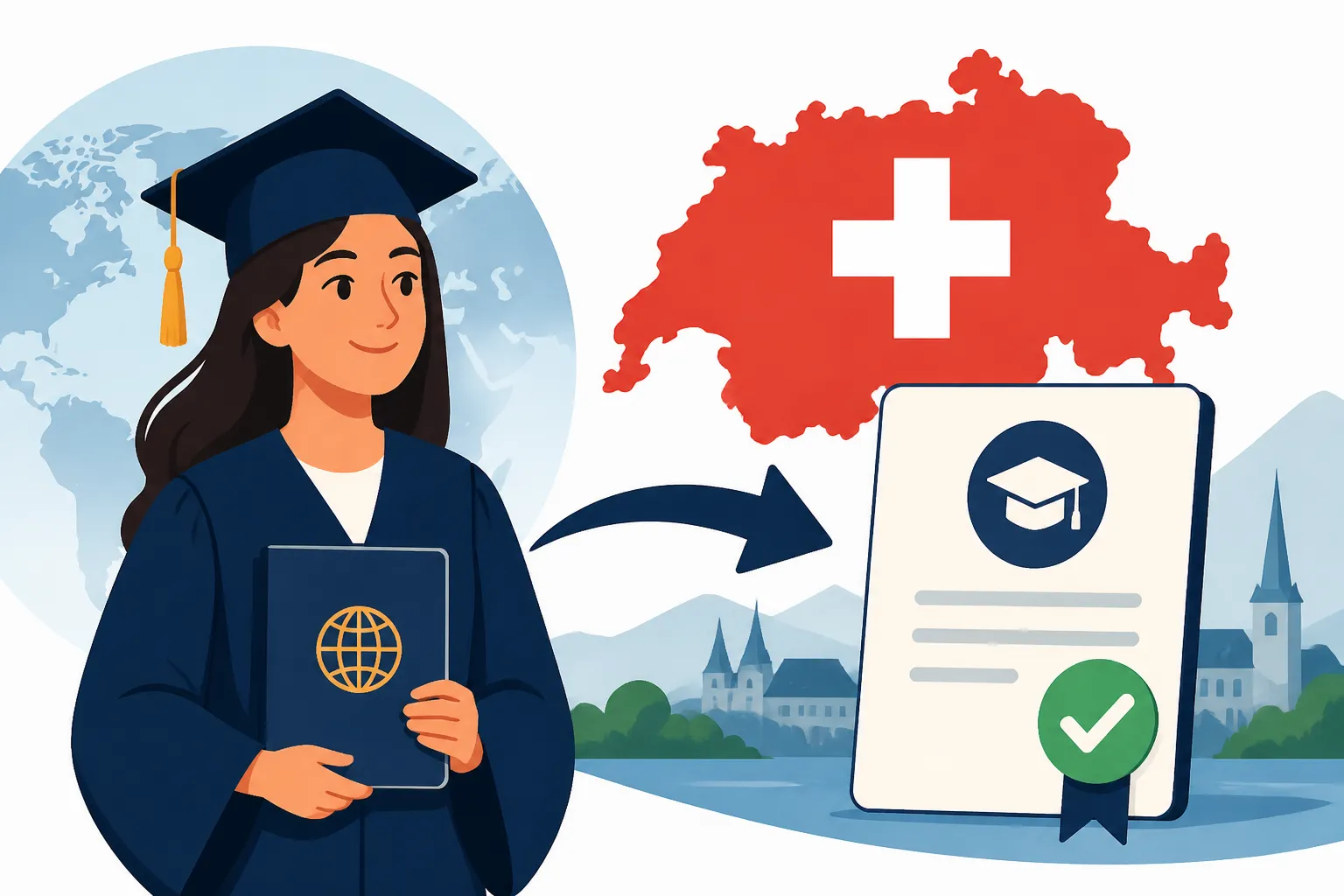
Navigating the labyrinthine world of Swiss bureaucracy is a rite of passage for every expat, and trying to get your foreign university degree recognized here can feel like trying to solve a Rubik's Cube blindfolded. Many hopeful newcomers quickly discover that their hard-earned diploma, celebrated in their home country, isn't automatically accepted in the same way in Switzerland, leading to confusion, frustration, and often, significant delays in job searching or career progression. This comprehensive guide will demystify the process, clarify which institutions are responsible for what, and give you the realistic steps you need to take to get your foreign degree assessed, especially in relation to swissuniversities.
Why Degree Recognition in Switzerland is a Unique Challenge
When you first arrive in Switzerland, full of optimism and a shiny new job offer (or hopes for one!), the last thing you expect is for your academic credentials to be questioned. Yet, this is a very common hurdle. The Swiss system, known for its precision and high standards, has a very particular way of evaluating foreign qualifications, and it's not always a straightforward "yes" or "no" answer. This complexity stems from several factors, including the decentralized nature of Swiss education and the strict regulations around certain professions.
The Swiss Education System in a Nutshell
Unlike many centralized education systems, Switzerland's is a federalist one, meaning much of the responsibility for education lies with the 26 individual cantons. While there's a federal framework, nuances can exist. The system typically distinguishes between universities (like ETH Zurich or EPFL), universities of applied sciences (Fachhochschulen/HES), and vocational education and training (VET). This diverse landscape means that the "type" of degree you hold (e.g., Bachelor, Master, PhD) and its practical orientation will influence how it's viewed. It's not just about the academic rigor, but also how it aligns with Swiss professional pathways.
Regulated vs. Non-Regulated Professions: The Crucial Distinction
This is perhaps the single most important concept to grasp when it comes to foreign degree recognition. Your path will diverge dramatically depending on whether your profession is regulated or non-regulated in Switzerland.
- Regulated Professions: These are fields where specific legal qualifications are required to practice, often for public safety, health, or legal reasons. Think doctors, dentists, nurses, pharmacists, teachers, architects, lawyers, and certain engineers. For these professions, you must undergo a formal recognition process by the relevant Swiss authority to be allowed to practice. Without it, your foreign degree is, in essence, just a piece of paper for that specific role. The process for these is often quite rigorous, involving direct equivalence checks, possibly supplementary exams, or periods of supervised practice.
- Non-Regulated Professions: Most other professions fall into this category. For these, there's no legal requirement for your degree to be officially "recognized" in the same way. Instead, your degree will be evaluated for its comparability to a Swiss degree. This is more about providing a formal document that potential employers, universities for further studies, or immigration authorities can use to understand where your qualification stands in the Swiss context. While not legally mandatory to practice, having this evaluation can significantly smooth your job search and boost your credibility, especially if your home country's education system is less familiar to Swiss recruiters.
Understanding this distinction early on will save you a lot of time and direct you to the correct authority from the outset.
The Role of swissuniversities and Other Key Bodies
Many expats initially turn to "swissuniversities" for degree recognition, and while they play a vital role, they are not the sole authority for all recognition types. It’s crucial to understand the landscape of institutions involved to avoid missteps.
swissuniversities: The Information Hub
swissuniversities is the Rectors' Conference of Swiss Universities. Its primary role is to coordinate and represent the interests of Swiss universities. When it comes to foreign degrees, swissuniversities acts as an information point for academic recognition matters. They provide general information and guidance on the comparability of foreign higher education qualifications to Swiss ones. They publish crucial documentation and maintain a database of country-specific information. However, they do not issue formal recognition decisions themselves for individual degrees. Think of them as the expert advisors and data providers, not the decision-makers. If you're wondering what your degree might be equivalent to, their website is a fantastic starting point for understanding the general framework.
State Secretariat for Education, Research and Innovation (SERI): The Main Authority for Non-Regulated Professions
For those with degrees in non-regulated professions, the State Secretariat for Education, Research and Innovation (SERI) is your go-to federal authority. SERI is responsible for issuing official statements of comparability for foreign higher education qualifications. This is the recognition body that will assess your university degree and determine its academic comparability to a Swiss degree. This statement is invaluable for job applications, as it provides a standardized reference for employers who might not be familiar with your home country's university system. It’s also often required for residence permit renewals or naturalization processes where proof of integration through education is sought.
Specific Professional Bodies: For Doctors, Teachers, and More
As mentioned, regulated professions have their own dedicated bodies. These are highly specialized and often have very detailed requirements.
- Medical Professionals (MEBEKO): If you are a doctor, dentist, pharmacist, or other health professional, your degree recognition falls under the Medical Professions Commission (MEBEKO) within the Federal Office of Public Health (FOPH). This process is notoriously rigorous and often requires language proficiency, clinical experience, and sometimes compensatory measures or exams. It's a journey, not a quick stop. For those thinking of entering the Swiss healthcare system, understanding the process for Finding Medical Care in Switzerland: Doctors, Specialists, and Referrals is essential.
- Teaching Qualifications (EDK): For teachers, the Swiss Conference of Cantonal Ministers of Education (EDK) is the relevant authority. Their process will assess if your teaching diploma and subject qualifications align with Swiss cantonal requirements, which can vary. This often involves detailed curriculum comparisons and potentially further training.
- Engineering and Other Regulated Fields: While SERI can assess engineering degrees for academic comparability, for the right to use specific professional titles or work in regulated engineering fields, you might need additional recognition through specific professional associations or cantonal bodies. For example, some professional titles might require registration with an association. Similarly, legal professionals (lawyers) will need to navigate specific cantonal bar association requirements, which often involve further Swiss legal education or examinations.
- Other Vocations: Even for vocational qualifications that aren't university degrees, there are often specific bodies. For example, if you're a nurse, the Swiss Red Cross (SRK) is typically involved in the recognition of your diploma.
The key takeaway here is: identify if your profession is regulated first. If it is, go directly to the specific professional body. If not, SERI is your port of call.
Step-by-Step: Getting Your Degree Assessed for Non-Regulated Professions (SERI)
Let's dive into the practical steps for getting your degree from a non-regulated field assessed by SERI. This is the most common recognition path for many expats.
Initial Assessment: The Document Gathering and Application Process
The application process for SERI recognition is meticulous, as one would expect in Switzerland. You'll need to prepare a comprehensive dossier.
- Check SERI's Requirements: Start by visiting the SERI website (search for "SERI Diplomanerkennung"). They have detailed lists of required documents, often categorized by country. This is where you'll get specific instructions on what to submit from your home country's education system.
- Gather Your Documents: This is where the real fun begins. You'll need:
- Application Form: Download and complete the official form from the SERI website.
- Official Diplomas/Certificates: Your original degree certificates.
- Transcripts: Detailed academic transcripts showing all courses, grades, and credit hours.
- Curriculum/Syllabus: Often, SERI will ask for a detailed description of your university's curriculum or syllabus for the program you completed. This helps them understand the content and scope of your studies. This can be challenging if your university's records aren't easily accessible.
- Proof of Practical Training: If your degree program included internships or practical work, documentation of this will be important.
- Proof of Work Experience: Resumes/CVs and employment certificates relevant to your degree. While not strictly "degree recognition," it helps paint a complete picture of your professional profile in relation to your education.
- Identity Document: A copy of your passport or ID.
- Residence Permit: A copy of your Swiss residence permit (L, B, or C permit).
- Translations: Crucially, if your documents are not in German, French, Italian, or English, you will need official certified translations. Do not skimp on this; only sworn translators are accepted.
- Pay the Fee: There is a fee for the SERI comparability statement, which can range from a few hundred to over a thousand Swiss Francs, depending on the complexity and the extent of the assessment.
- Submit the Application: Send your complete dossier to SERI via registered mail. Keep copies of everything! The processing time can vary significantly, often taking several weeks to a few months. Patience is not just a virtue, it's a necessity here.
The Outcome: Equivalence vs. Comparability and What It Means
Once SERI completes its assessment, you'll receive a formal statement. This statement will typically declare one of two things:
- Academic Comparability: This is the most common outcome. It means your foreign degree is deemed "comparable" to a specific Swiss degree (e.g., "Your Master's degree in X from University Y is comparable to a Master's degree from a Swiss University of Applied Sciences in a similar field"). This statement is not a full "equivalence" but confirms the academic level and broad subject area, which is usually sufficient for non-regulated jobs and further academic pursuits.
- Full Equivalence: This is rarer and typically reserved for degrees from countries with very similar education systems to Switzerland, or where specific bilateral agreements exist. It means your degree is considered directly equivalent to a specific Swiss degree.
The SERI statement is a powerful tool. It standardizes your foreign credential, making it understandable and acceptable to Swiss employers, especially when applying for roles where formal qualifications are important. It helps bridge the gap where a Swiss employer might not recognize a university from your home country but will always recognize an official SERI statement.
Potential Roadblocks and What to Do
The path to recognition isn't always smooth. Here are some common roadblocks:
- Missing Documents: If your university is no longer in operation or struggles to provide detailed syllabi, it can be a nightmare. SERI may ask for more information or clarification, prolonging the process. Try to anticipate this and gather as much as possible beforehand.
- Insufficient Comparability: In some cases, SERI might determine that your degree isn't fully comparable to a specific Swiss qualification due to differences in curriculum, duration, or academic level. They will usually explain why.
- Cost and Time: The fees and waiting times can be frustrating, especially if you're trying to quickly secure employment. Factor these into your relocation budget and timeline.
- Language Barrier: Ensure all communications and documents are in an accepted language. If you're struggling with the German, French, or Italian forms, consider using a language learning platform like iTalki to brush up your skills or seek help from a professional translation service. Clear communication is paramount.
If you face a denial or a less-than-favorable outcome, don't despair. SERI usually provides clear reasons. You might be able to appeal or provide additional documentation. Alternatively, you might need to consider further education in Switzerland.
Degree Recognition for Regulated Professions: The Specialized Path
For regulated professions, the journey is even more specialized and often more demanding. Let's look at a few examples.
Medical Professionals (MEBEKO)
As a medical professional, MEBEKO recognition is non-negotiable. The process involves:
- Application and Fees: A hefty application fee and extensive documentation, including detailed transcripts, medical certificates, proof of internships, and often proof of current professional registration from your home country.
- Language Skills: Mandatory proof of proficiency in one of Switzerland's official languages (German, French, or Italian) is almost always required to a high level (e.g., B2 or C1). Effective communication is paramount in healthcare.
- Equivalence Check: MEBEKO performs a detailed check against Swiss medical curricula. If there are significant differences, you might be required to complete compensatory measures, such as additional training modules, internships, or even pass Swiss federal exams.
- Temporary vs. Permanent Licenses: You might initially receive a temporary license, requiring supervised practice before full recognition.
- Specialist Recognition: If you have a specialist qualification (e.g., cardiologist, surgeon), this will be assessed separately after your basic medical degree is recognized. The process for Accessing Specialists Without a Referral: What Your Insurance Model Allows in Switzerland is complex enough; imagine the hurdles for the specialists themselves!
Teaching Qualifications (EDK)
Teaching in Switzerland, particularly in public schools, requires EDK recognition.
- Cantonal Differences: While EDK sets federal guidelines, cantonal education departments have significant autonomy. This means specific requirements can vary slightly depending on whether you want to teach in Zurich, Geneva, or Ticino.
- Curriculum Comparison: EDK will compare your teaching diploma and subject specializations against the Swiss curriculum. This often involves detailed comparison of pedagogical training, subject matter depth, and practical teaching experience.
- Supplementary Training: It's common for foreign-trained teachers to need to complete supplementary training, particularly in Swiss pedagogy, local language education, or specific subjects that might be taught differently here.
- Language Proficiency: High-level language skills in the language of instruction of the canton (German, French, or Italian) are absolutely essential.
Other Regulated Fields
For other fields like architecture or specific engineering roles, recognition processes might involve professional associations or a combination of SERI and cantonal bodies. For engineers, SERI might provide academic comparability, but a professional body might verify the practical experience and specific competences required for certain tasks or titles. Legal professionals, for instance, face an even steeper climb, often needing to essentially retrain or complete significant parts of a Swiss law degree to practice law here, given the unique nature of Swiss legal codes.
What to Do If Your Degree Isn't Fully Recognized
It's a tough pill to swallow when your qualifications don't quite fit the Swiss mold. However, this isn't necessarily a dead end. Many expats find alternative routes to success.
Further Education or Upskilling in Switzerland
If your degree isn't fully recognized, or if you need to bridge gaps, consider further education in Switzerland.
- CAS/DAS/MAS Programs: Certificates of Advanced Studies (CAS), Diplomas of Advanced Studies (DAS), and Masters of Advanced Studies (MAS) are popular postgraduate programs designed for working professionals to specialize or upskill. These shorter programs can be an excellent way to gain a recognized Swiss qualification in your field or transition into a related one.
- Swiss Federal Diplomas: For some vocational fields, acquiring a Swiss federal diploma (Eidgenössischer Fachausweis or Eidgenössisches Diplom) can be more valuable to employers than a foreign university degree, especially in fields with strong vocational training traditions. These are highly regarded here and signal excellent integration into the Swiss professional landscape.
- Language Learning: As a general rule, improving your German, French, or Italian will always increase your employability and integration, regardless of your degree recognition status. Learning the local language through classes or platforms like iTalki will not only open doors professionally but also socially.
Focusing on Experience and Practical Skills
For non-regulated professions, sometimes demonstrating robust work experience can trump formal recognition, especially if your degree's comparability is only slightly off.
- Highlight Transferable Skills: Focus your CV and interviews on your practical achievements, project experience, and transferable skills.
- Networking: Leverage professional networks. Often, a personal connection or recommendation can help an employer look beyond a formal recognition document if your skills are evident.
- Target International Companies: Multinationals in Switzerland, especially in cities like Zurich or Geneva, are often more familiar with diverse international qualifications and might be less stringent about formal Swiss recognition for non-regulated roles. These companies are also often accustomed to dealing with the complexities of Taxes for Expats and can provide clearer guidance on financial aspects related to your employment.
Language Skills and Cultural Integration
Beyond the formal papers, your ability to communicate and integrate culturally plays a massive role.
- Language Proficiency: We can't stress this enough. Even if your degree is fully recognized, limited language skills will severely hinder your job prospects outside of very niche, English-only roles. Investing in learning German, French, or Italian is perhaps the best investment you can make in your Swiss career.
- Understanding Swiss Work Culture: Familiarize yourself with the local business etiquette. Punctuality, direct communication, and a strong work ethic are highly valued. Showcasing an understanding of The Swiss Corporate Culture: Meetings, Hierarchy, and Professional Etiquette can make a significant difference.
| Recognition Body | Primary Function | Professions Covered | Outcome |
|---|---|---|---|
| swissuniversities | Information and guidance on academic comparability | All higher education qualifications | General information; DOES NOT issue formal recognition |
| SERI | Official statement of academic comparability | Non-regulated professions (e.g., business, humanities, non-specialized IT) | Statement of comparability to a Swiss degree |
| MEBEKO | Formal recognition and licensing | Regulated medical professions (doctors, dentists, nurses, pharmacists) | License to practice medical profession |
| EDK | Formal recognition of teaching diplomas | Regulated teaching professions | Authorization to teach in Swiss schools |
| Swiss Red Cross (SRK) | Formal recognition of health-related vocational diplomas | Specific health professions (e.g., certain nursing diplomas, physiotherapists) | Recognition of vocational diploma |
Disclaimer
Please remember that the information provided in this guide is for general informational purposes only and is subject to change. The specific requirements for degree recognition can vary significantly based on your country of origin, the specific institution and program, the canton you reside in, and current Swiss legal frameworks. Always consult the official websites of SERI, MEBEKO, EDK, or swissuniversities, and if necessary, seek personalized advice from a professional legal or immigration consultant for your particular situation.