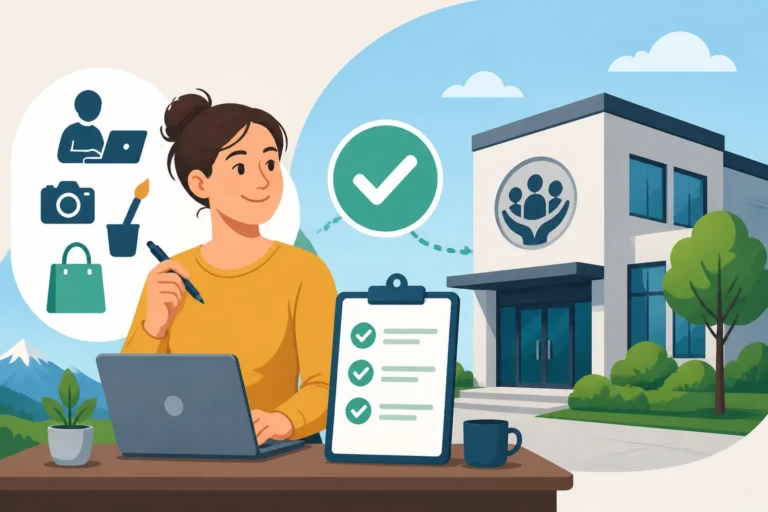
Switching Industries in Switzerland: Transferable Skills That Sell
It's incredibly common for expats to arrive in Switzerland with a career path firmly in mind, only to find that over time, their priorities shift, or they simply yearn for a change of scenery in their professional life. Yet, the thought of switching industries in this highly specialized and seemingly rigid market can feel utterly daunting, like trying to navigate a mountain pass in a heavy fog. This guide is here to cut through that fog, showing you how to leverage your existing experience and articulate your transferable skills to successfully pivot into a new sector in Switzerland.
The Unique Challenges of a Swiss Industry Switch
Making a significant career change is rarely easy, no matter where you are in the world. However, here in Switzerland, the landscape presents a particular set of hurdles that can make an industry switch feel even more formidable. You're not just changing jobs; you're often navigating a different set of cultural expectations, professional norms, and sometimes, even language demands.
Cultural Expectations and Industry Rigidity
One of the first things you'll likely notice when trying to shift gears professionally in Switzerland is the strong emphasis on specialized qualifications and a more linear career progression. Unlike some other countries where a diverse, zig-zagging career path might be seen as a strength, Swiss employers often prefer candidates who have followed a clear, focused trajectory within a specific field. This isn't necessarily a bad thing, but it can make it frustrating if you're trying to move from, say, marketing into data analytics, or from teaching into corporate training. You might feel like you're caught in a paradox where you're "overqualified" in terms of general experience but "under-experienced" in the precise niche of the new industry you're targeting.
This cultural preference for depth over breadth can make industries appear quite rigid from the outside. Highly regulated sectors like banking, pharmaceuticals, or engineering often demand very specific certifications and a proven track record within their confines. If you've spent years honing skills in a different domain, it can feel like you're starting from scratch, or worse, that your valuable past experience isn't being recognized. It's a common expat lament to hear how difficult it is to get that first "in" when you don't have the exact Swiss qualification or the direct industry experience, even if your underlying abilities are a perfect match.
Furthermore, networking, while universally important, takes on a nuanced role here. Many positions are filled through personal connections, which can be tough to build when you're an outsider trying to break into a new professional circle. While there are certainly some dynamic sectors, such as parts of the tech industry or international organizations, that might be more accustomed to diverse backgrounds, be prepared for a marathon, not a sprint, when trying to make a substantial pivot. Understanding The Swiss Corporate Culture: Meetings, Hierarchy, and Professional Etiquette can give you a significant edge in these interactions.
Language Barriers and Local Nuances
Even if your target industry in Switzerland primarily operates in English, don't underestimate the persistent shadow of language barriers and local nuances. While many international companies and larger corporations do conduct business in English, particularly in global hubs like Zurich, Geneva, or Basel, the deeper you delve into specific industries or smaller, local companies, the more likely you are to encounter German, French, or Italian as the primary working language. This isn't just about everyday conversation; it extends to industry-specific terminology, internal communications, and, crucially, client interactions.
Imagine you're trying to transition into a client-facing role in a new industry. Even if your technical skills are impeccable, a lack of proficiency in the local language can be a significant hurdle. Swiss companies often value the ability to connect with local clients and stakeholders in their native tongue, fostering trust and seamless communication. This is where investing in language skills really pays off. Tools like iTalki can be incredibly helpful for expats looking to improve their German, French, or Italian conversation skills, even for just a few hours a week. It shows initiative and a commitment to integrating, which employers here truly appreciate.
Beyond language, there are unwritten rules about how business is done, how communication flows, and how professional relationships are built. These local nuances can be subtle but impactful. For instance, the way you structure your CV or cover letter can be crucial. Traditional Swiss CVs often include a photo and very specific information, and understanding Writing a Swiss CV: Formats, Photos, and Professional Norms is vital. A common frustration among expats is how to explain career changes or periods of self-reinvention on a CV that historically values stability. It requires careful thought to present your journey as intentional growth rather than a series of disconnected steps. Overcoming these seemingly minor details can make a big difference in how your application is perceived.
Identifying and Packaging Your Transferable Skills
The secret weapon in any successful industry switch, especially in Switzerland, isn't necessarily acquiring a whole new set of degrees (though targeted upskilling helps!), but rather effectively identifying and showcasing the transferable skills you already possess. These are the underlying capabilities that aren't tied to a specific industry but are universally valuable across different professional contexts.
Deconstructing Your Professional Experience
The first step in this process is to stop thinking about your past job titles and start dissecting what you actually did in your previous roles. Many expats make the mistake of simply listing their responsibilities as they appeared in their old job descriptions. Instead, you need to dig deeper and identify the core competencies that underpinned your success. Were you managing projects from conception to completion? That's project management. Did you analyze complex data sets to make informed decisions? That's data analysis and strategic thinking. Were you constantly communicating with diverse stakeholders, resolving conflicts, or negotiating agreements? Those are critical communication and negotiation skills.
Think about the problems you solved, the initiatives you led, and the tangible results you achieved. For instance, if you worked in hospitality, you weren't just "serving customers"; you were likely managing customer expectations, problem-solving under pressure, coordinating with multiple teams, and potentially handling financial transactions. These are all highly sought-after skills in fields like operations, client relations, or even event management. Quantifying these achievements is also crucial. Instead of saying "improved efficiency," try "streamlined a process that reduced delivery times by 15%." This kind of specific, results-oriented language immediately makes your experience more impactful and easier for a hiring manager in a new industry to understand, even if the context is unfamiliar.
Focus on generic yet powerful skills that resonate across various sectors: leadership, analytical thinking, problem-solving, attention to detail, adaptability, digital literacy, and cross-cultural communication. These are the bedrock of effective professional performance, regardless of the industry. Once you've broken down your experience into these fundamental components, you'll start to see that your "irrelevant" past roles are actually rich mines of highly valuable, transferable capabilities.
Translating Skills for a New Industry
Once you've identified your core transferable skills, the next critical step is to learn how to translate them into the language and context of your target industry. Every sector has its own jargon, its own set of priorities, and its own way of describing roles and responsibilities. Your job is to act as the bridge, demonstrating how your existing skills directly address the needs of your desired new field.
Let's take a common example: a teacher looking to move into corporate learning and development. Instead of highlighting "classroom management," you'd reframe it as "facilitation of group dynamics," "design and delivery of instructional content," or "assessment of learning outcomes." A customer service representative's ability to "handle difficult calls" transforms into "conflict resolution," "client relationship management," or "de-escalation techniques." The key is to understand the pain points and priorities of the new industry and then map your skills directly to those needs. If you are struggling with this, resources that help with Writing a Cover Letter for Swiss Jobs: Formality and Tone can also guide you in how to phrase your transferable skills effectively.
This translation process isn't just about tweaking words; it's about fundamentally understanding the new industry. Spend time researching job descriptions in your target field, reading industry publications, and conducting informational interviews to grasp their specific challenges and vocabulary. This will enable you to tailor your CV, cover letter, and interview answers so precisely that the hiring manager can easily envision you succeeding in their environment. Remember, the goal is to make it effortless for them to see your potential, not to make them do the work of connecting the dots.
The Role of Soft Skills in Switzerland
While hard skills are often what get you through the door, in Switzerland, soft skills play an exceptionally important role, especially when you're making an industry pivot. Swiss workplaces highly value certain attributes that are deeply ingrained in the culture, and showcasing these can be a powerful differentiator. Even if your technical experience in a new field is still developing, demonstrating these "Swiss virtues" can highlight your potential as a valuable, reliable team member.
Think about the emphasis on punctuality and reliability. Showing up on time, delivering on promises, and being dependable are not just good professional practices; they are foundational expectations here. If you've consistently met deadlines and been a trustworthy colleague in your previous roles, these are transferable assets that signal a strong work ethic. Attention to detail and a commitment to quality are also highly prized, reflecting the Swiss reputation for precision and excellence. Your ability to demonstrate thoroughness, accuracy, and a meticulous approach to your work will resonate strongly with potential employers.
Furthermore, a collaborative spirit, discretion, and a pragmatic, problem-solving attitude are often more important than flashiness. While being outspoken and assertive might be valued in some cultures, a more measured, thoughtful, and consensus-driven approach often works better in Swiss teams. By highlighting instances where you've successfully worked within a team, adapted to new procedures, or calmly navigated complex situations, you're not just showing your soft skills; you're demonstrating your capacity to integrate into a Swiss professional environment. These attributes are often universal but gain particular significance in the Swiss context, making them incredibly valuable "transferable assets" that can help bridge gaps in industry-specific knowledge.
Strategic Approaches to an Industry Transition
Embarking on an industry switch in Switzerland demands a strategic approach. It's not enough to just identify your transferable skills; you need a plan to acquire new knowledge, build new connections, and sometimes, creatively demonstrate your readiness for a different path.
Upskilling and Reskilling for the Swiss Market
Sometimes, even with the best transferable skills, there's a specific knowledge gap or certification requirement in your target industry that you simply can't bridge with past experience alone. This is where upskilling and reskilling become absolutely essential. The good news is that Switzerland has excellent educational opportunities, ranging from short courses to advanced degrees, designed to help professionals adapt and grow. Pursuing Continuing Education in Switzerland: Weiterbildung Courses for Career Growth can be a game-changer.
Consider what specific technical skills or industry-specific qualifications are repeatedly mentioned in job descriptions for your desired roles. For instance, if you're moving into data science, you might need Python or R programming skills. If it's a compliance role, a specific certification might be non-negotiable. Look into reputable online learning platforms, local adult education centers (Volkshochschulen), or even part-time programs at Swiss universities or Fachhochschulen (universities of applied sciences). These institutions often offer specialized diplomas or certificates that are highly recognized and valued by Swiss employers. They not only provide you with the necessary hard skills but also demonstrate your commitment to the new field and your proactive approach to learning.
A well-chosen course can act as a crucial signal to potential employers that you are serious about the transition and have invested in acquiring the foundational knowledge needed. It also expands your professional network within the new industry, which brings us to our next point.
Networking and Informational Interviews
In Switzerland, the adage "it's not what you know, but who you know" often holds particular weight. Networking is incredibly potent, and for an industry switch, it becomes absolutely vital. Many jobs, especially specialized ones, are filled through internal referrals or professional connections long before they ever hit public job boards. As an expat, you might feel like you're starting at a disadvantage, but proactive networking can quickly turn that around. When changing industries, these connections become even more important as they can offer insights you won't find anywhere else.
Start by identifying professionals who work in your target industry. LinkedIn is an obvious starting point, but also explore local professional associations, industry-specific events, and meetups. Platforms like Meetup.com or even local chambers of commerce can be valuable. The goal isn't to immediately ask for a job, but rather to conduct informational interviews. These are low-pressure conversations where you seek advice and insights from someone working in the field. Ask them about their career path, the skills they find most important, the challenges of the industry, and what advice they would give someone like you looking to transition.
These conversations are invaluable for several reasons: they help you validate your career change decision, refine your understanding of the industry, identify specific skills to acquire, and, crucially, expand your professional circle. Each person you speak with might know someone else who can offer further insights or even a lead. Always be respectful of their time, come prepared with intelligent questions, and follow up with a thank-you note. Remember, Swiss networking tends to be more understated and built on trust, so patience and genuine interest are key. Learning how to navigate Networking in Switzerland: Professional Events and Industry Meetups will be essential.
Proving Your Value Through Projects and Internships
Sometimes, talking about transferable skills isn't enough; you need to show them. If you're encountering significant resistance due to a lack of direct experience in your new industry, consider ways to build a portfolio of relevant work, even if it's not through a traditional paid role. This could involve taking on volunteer projects, engaging in pro-bono work, or even creating your own personal projects that demonstrate your capabilities.
For example, if you're transitioning into graphic design, start designing websites or branding for small non-profits or friends. If you're moving into sustainability consulting, volunteer for an environmental organization and help them with a specific project. Some companies, especially startups or smaller firms, might even be open to short-term internships (Schnupperlehre) or project-based contracts for career changers. These opportunities, even if unpaid or low-paid initially, provide you with invaluable real-world experience, a chance to apply your transferable skills in a new context, and tangible evidence of your commitment and ability. They also give you recent, relevant references to include in your Writing a Swiss CV: Formats, Photos, and Professional Norms.
This "portfolio" approach is particularly powerful in industries that value practical application and results over purely academic qualifications. It demonstrates initiative, adaptability, and a hands-on learning attitude – qualities that are highly respected in the Swiss professional landscape. Don't be afraid to get creative and seek out opportunities to prove your value beyond a traditional job application.
Financial and Administrative Considerations
Making an industry switch can have significant ripple effects, not just professionally but also financially and administratively. It's crucial to go into this process with your eyes wide open, understanding the potential impacts on your wallet and your legal status in Switzerland.
Firstly, be realistic about the financial implications. A career change, especially if it involves moving into an entry-level position in a new field or taking on an internship, might mean a temporary reduction in income. You'll need to budget carefully and ensure you have sufficient savings to weather this period. This is also a good time to consider how any significant income changes might affect your tax situation. For complex scenarios, especially when your income fluctuates or you're considering setting up a side hustle in a new field, getting advice from specialists like Taxes for Expats can be incredibly beneficial. They can help clarify how your new professional path impacts your federal, cantonal, and municipal tax obligations, ensuring you stay compliant. For more details on tax filing, consider reading Filing a Swiss Tax Return (C Permit or High Earners on B Permit).
Secondly, and critically for non-EU/EFTA citizens, understand the administrative hurdles related to your residence permit. If you hold a "tied" B permit, which is specific to a particular employer and role, changing industries might require new authorization from the cantonal migration office. Even if your permit is untied, a drastic change in your employment status or income could theoretically raise questions during a renewal, although this is less common for C permit holders. Always consult your cantonal migration office or a legal expert if you have any doubts about how a career change might impact your permit status. Knowing the rules around Tied vs Untied B Permits: Can You Freely Change Employers is paramount to avoiding unexpected administrative headaches. Planning for these financial and administrative aspects proactively will ensure a smoother transition, allowing you to focus on building your new career without unnecessary stress.
Common Transferable Skills for Industry Switching
To help you visualize your own transferable skills, here’s a table outlining some common skills and how they might translate across different industries.
| Core Transferable Skill | Example from Previous Industry (e.g., Teaching) | How it Translates to New Industry (e.g., Project Management) |
|---|---|---|
| Communication | Explaining complex concepts to diverse students. | Leading team meetings, stakeholder communication, reporting. |
| Problem-Solving | Adapting lesson plans for unexpected challenges. | Identifying project risks, developing contingency plans. |
| Organization | Managing class schedules, grading, resources. | Scheduling tasks, resource allocation, maintaining documentation. |
| Leadership | Guiding student groups, mentoring new teachers. | Motivating teams, delegating tasks, fostering collaboration. |
| Time Management | Juggling multiple classes, deadlines, activities. | Meeting project milestones, managing workloads effectively. |
| Adaptability | Adjusting teaching methods to different learning styles. | Pivoting strategies in response to market changes or new data. |
| Analytical Thinking | Assessing student performance data to improve outcomes. | Analyzing project data, identifying trends, making data-driven decisions. |
| Stakeholder Management | Engaging with parents, school administration, colleagues. | Liaising with clients, vendors, internal departments. |
| Training & Development | Designing and delivering educational content. | Onboarding new staff, developing training modules, facilitating workshops. |
Disclaimer
The information provided in this guide is for general informational purposes only and does not constitute professional advice. While we strive to provide accurate and up-to-date content, administrative rules, legal regulations, and market conditions in Switzerland can change. Always consult with relevant authorities, legal professionals, tax advisors, or career counselors for advice tailored to your specific situation. We are not responsible for any actions taken based on the information presented herein.