Is Neon Bank Safe? Swiss Deposit Protection up to CHF 100,000
Moving to Switzerland often feels like a series of expensive puzzles, and choosing where to park your hard-earned salary is arguably the most stressful one. When I first arrived in Zurich, I spent weeks carrying around far too much cash because I was intimidated by the high fees of traditional banks, yet terrified that a digital app might just disappear overnight. This guide breaks down exactly why Neon is safe, how the Swiss deposit protection works, and what happens to your money in a crisis.
The Hypothekarbank Lenzburg Partnership: Who Actually Holds Your Money
One of the biggest misconceptions I had when I first opened my account was that Neon itself was a bank. In the strict legal sense of Swiss financial law, Neon is a technology company that provides a banking interface. However—and this is the crucial part that should help you sleep better—they do not actually "hold" your money in their own pockets. They have a deep-rooted partnership with Hypothekarbank Lenzburg, a traditional Swiss bank that has been around for over 150 years.
When you open an account through the Neon app, your Swiss Francs are actually sitting in an account managed by "Hypi" Lenzburg. This is a massive sigh of relief for anyone used to the "move fast and break things" culture of some international fintechs. Because your money is held by a licensed Swiss bank, it is subject to the same rigorous oversight as the giants like UBS or the cantonal banks. This distinction is vital for your Financial Checklist for Your First 30 Days as an Expat in Switzerland because it means you aren't just trusting a startup; you are trusting the established Swiss regulatory framework.
I remember the first time I had to explain this to the HR department at my first Swiss job. They were skeptical of an IBAN that didn't belong to one of the "Big Two." But as soon as they saw the underlying security of an established regional bank, the skepticism vanished. This setup ensures that even if Neon as a company were to face financial difficulties or go out of business, your funds remain segregated and held by the partner bank. You aren't just an entry in a digital ledger; you are a depositor in a regulated institution.
Understanding the Swiss Deposit Protection Scheme (esisuisse)
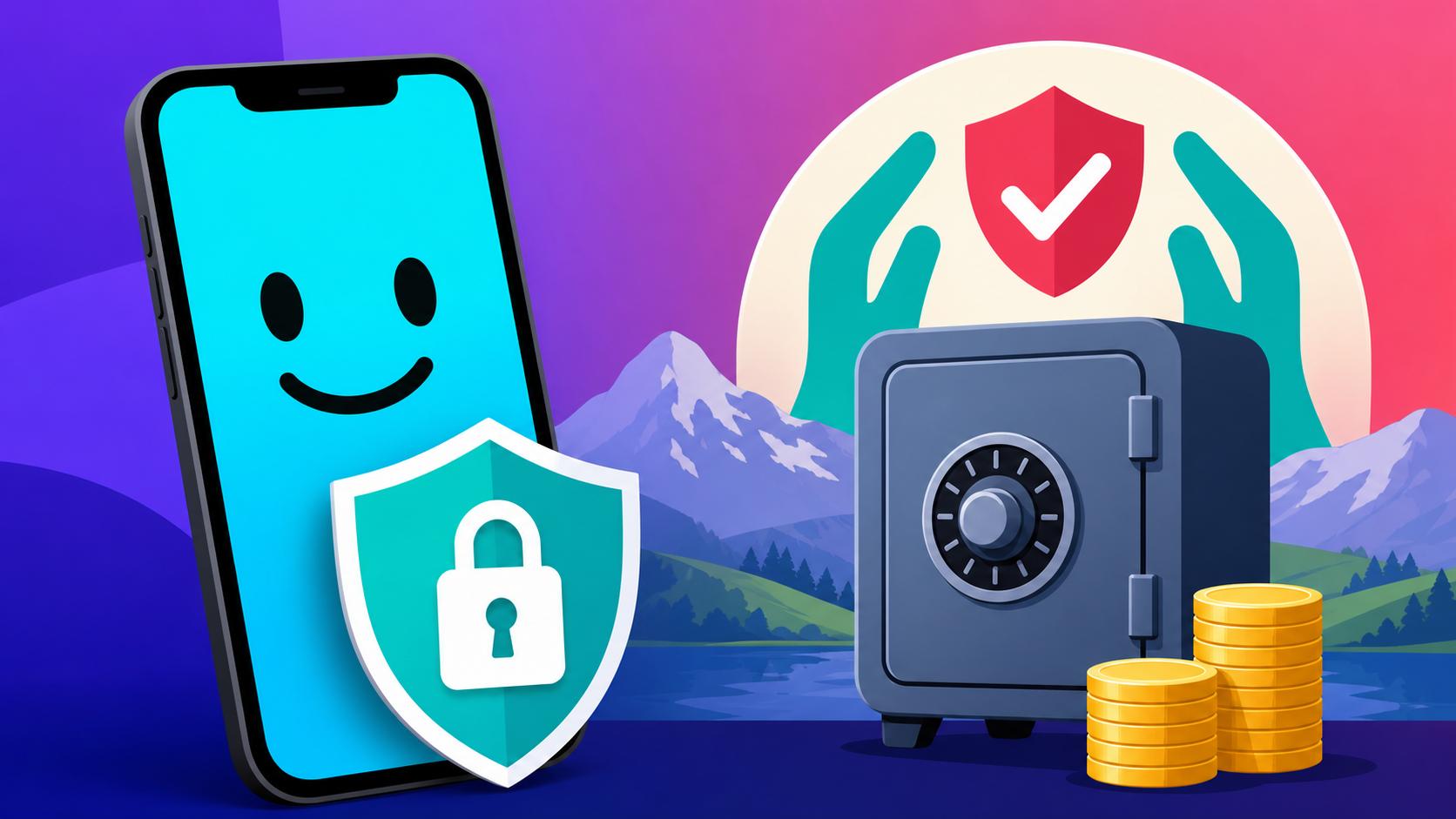
The cornerstone of banking safety in this country is a system called esisuisse. In Switzerland, every bank and securities firm must be a member of this self-regulatory organization. If a bank were to go bankrupt, esisuisse is the mechanism that ensures depositors get their money back quickly. Because your funds are held at Hypothekarbank Lenzburg, your deposits with Neon are protected up to CHF 100,000 per person.
This protection is a legal requirement under the Swiss Banking Act. It is not a "best effort" promise; it is a structured guarantee. If you are following the Banking and Finance for Expats in Switzerland: The 2027 Guide, you’ll know that Switzerland takes its reputation as a global financial safe haven very seriously. The esisuisse system is designed to pay out protected deposits within a very short timeframe—usually within 20 days of a bank’s license being revoked.
For most of us expats, staying under that CHF 100,000 limit is standard, but it’s something to keep in mind if you are planning to move large sums for a house down payment or a significant inheritance. If you have CHF 150,000 in your account, only the first CHF 100,000 is privileged and protected by the system. The remaining CHF 50,000 would be treated as a third-class claim in the bankruptcy proceedings. This is why many veterans of the Swiss system eventually diversify their holdings, perhaps using tools like Wise for international transfers or keeping separate accounts for different purposes.
Technical Security: App Protection and Data Privacy
Safety isn't just about bankruptcy; it’s about someone stealing your phone or hacking your account while you’re enjoying a fondue in Gruyères. Neon uses two-factor authentication (2FA) that is tied specifically to your device. You cannot just log in from any random computer with a password. You need your specific smartphone and your personal code (or biometric ID) to authorize any transaction.
The data storage is another "Swiss-ism" that I’ve grown to appreciate. All your personal data and account information are stored on servers located within Switzerland. Why does this matter? Because Swiss data protection laws are among the strictest in the world. Unlike some international apps where your data might be bouncing between servers in various jurisdictions, Neon keeps it local. This is particularly relevant when you are Registering Your Address at the Kreisbüro Within 14 Days of Moving and providing your most sensitive personal details to open an account; you want to know that information isn't being sold to the highest bidder.
In my experience, the "lost card" scenario is where the safety features really shine. Through the app, you can freeze your card instantly. I once thought I’d lost my wallet on the S-Bahn in Zurich and had my card blocked before the train even reached the next station. When I found it five minutes later tucked in my laptop bag, I unblocked it with a single tap. There was no need to spend forty minutes on hold with a call center, which is the kind of stress none of us need when already dealing with the high Cost of Living in Switzerland 2026: Budgeting for Singles and Families.
Comparing Safety: Neon vs. International Alternatives
When expats first arrive, they often compare Neon to international platforms they already know. It is important to understand that not all "fintech" apps provide the same level of protection as a Swiss bank account. While Neon offers full Swiss deposit protection, other tools serve different purposes and come with different risk profiles.
For example, many of us use Wise to move money back to our home countries because their exchange rates are nearly impossible to beat. However, while Wise is heavily regulated, it is an electronic money institution in many jurisdictions, not a bank with Swiss deposit insurance. Similarly, if you are using Trade Republic to dip your toes into the stock market or Binance for cryptocurrency, you are dealing with different types of asset protection. Trade Republic typically protects your cash via partner banks in the EU, while Binance operates in the highly volatile world of crypto where "protection" means something entirely different than it does in a Swiss savings account.
| Feature | Neon (via Hypi Lenzburg) | Wise | Trade Republic | Binance |
|---|---|---|---|---|
| License Type | Swiss Banking License | E-Money/Financial Services | Banking License (Germany) | Crypto Exchange |
| Deposit Protection | CHF 100,000 (esisuisse) | Safeguarding Rules | EUR 100,000 (EU Scheme) | None (User Funds Segregated) |
| Primary Focus | Daily Swiss Banking | Currency Exchange | Investing & Savings | Cryptocurrency |
| Data Storage | Switzerland | Global/EU | European Union | Global |
When you are Best Neobanks in Switzerland: Neon, Yuh, and Zak Compared, you see that the "Swissness" of the protection is the common thread. Neon, Yuh, and Zak all rely on the same CHF 100,000 guarantee, which makes them fundamentally safer for holding large portions of your salary than a non-bank platform.
Real-World Scenarios: What if Neon Disappears
Let's talk about the nightmare scenario: you wake up and the Neon app won't open, the website is down, and Twitter is blowing up with news that the company has folded. In this hypothetical situation, the most important thing to remember is that Neon does not have your money; Hypothekarbank Lenzburg does. Your IBAN is a "Hypi" IBAN.
Because the Swiss financial regulator (FINMA) oversees these arrangements, there would be a clear protocol. You would likely deal directly with Hypothekarbank Lenzburg to access your funds. You might have to provide your Filing a Swiss Tax Return (C Permit or High Earners on B Permit) documents or your residence permit to verify your identity, but the money is legally yours and sitting in a regulated vault, not lost in a digital void.
This is the beauty of the Swiss system. It is designed with redundancy. Even as we embrace the convenience of 2026 technology, the underlying "old world" banking structure remains. This is also why you will see Neon being perfectly acceptable for things like paying The Serafe Fee 2026: Paying the Mandatory CHF 335 Media Tax or setting up automated rent payments; the system trusts the underlying bank even if the app on your phone is brand new.
Final Verdict on Neon Safety
Is Neon bank safe? Yes. In fact, for a resident of Switzerland, it is arguably safer than keeping your money in many large international banks that lack the specific Swiss "esisuisse" backing. The combination of a modern, user-friendly interface and a 150-year-old traditional banking backbone offers the best of both worlds.
I’ve used Neon for years to manage everything from my daily coffee at Sprüngli to my monthly health insurance premiums. While it’s always wise to keep a backup—perhaps a few hundred Euros in Wise for travel or an investment account in Trade Republic for the long term—Neon has proven itself to be a rock-solid choice for the primary "salary dump" account.
Just remember to keep your phone's security up to date, never share your transaction PIN, and enjoy the fact that you are saving hundreds of francs a year in banking fees without sacrificing the legendary safety of the Swiss financial system. After all, those saved fees are much better spent on a weekend in Zermatt than on "account maintenance" charges at a big bank.
Disclaimer
This article is for informational purposes only and does not constitute financial, legal, or investment advice. While every effort has been made to ensure accuracy as of 2026, Swiss banking regulations and individual bank policies are subject to change. Always perform your own due diligence before opening any financial account.