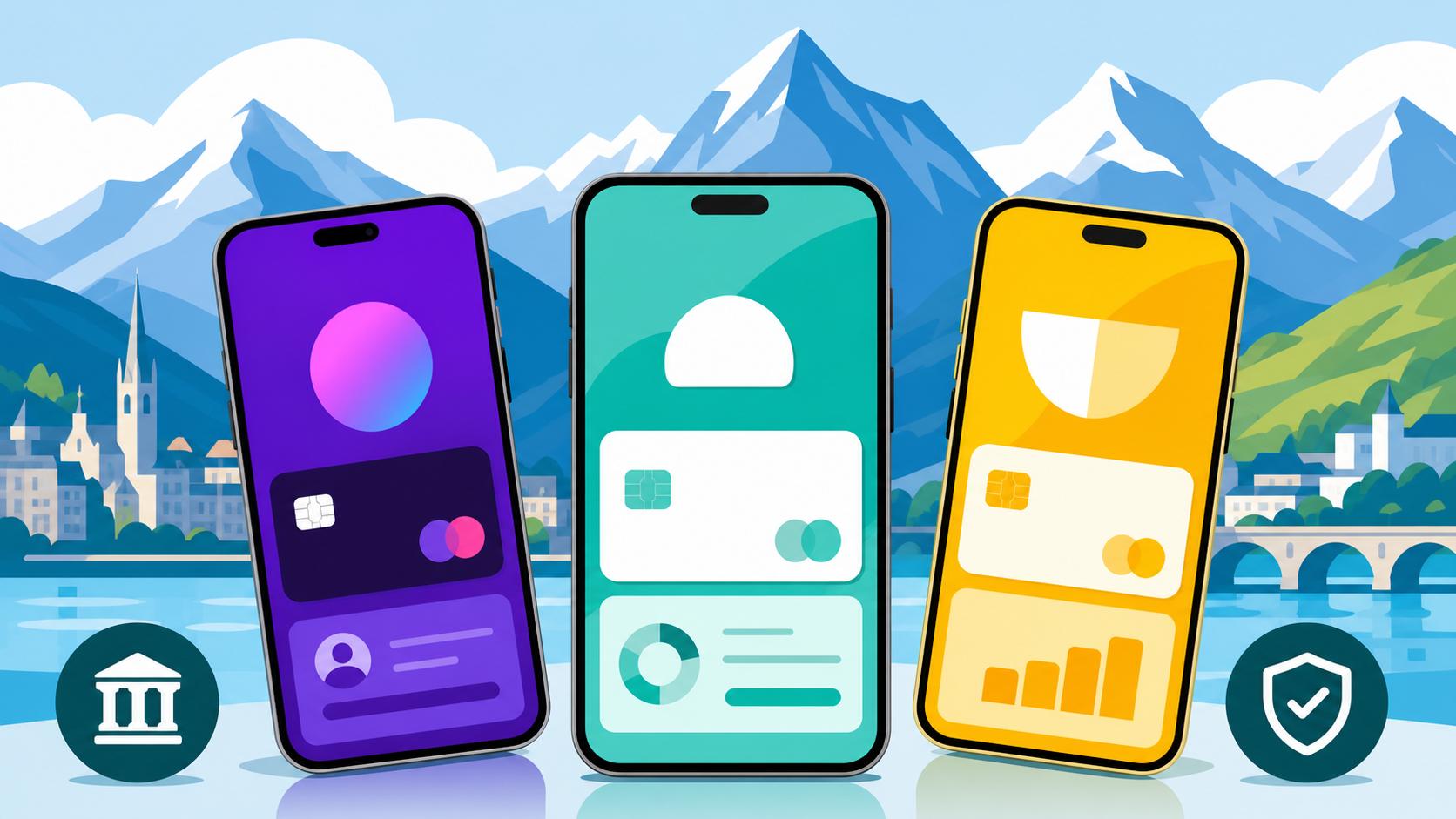
Best Neobanks in Switzerland: Neon, Yuh, and Zak Compared
Opening your first Swiss bank account often feels like a high-stakes interrogation where you are the one paying for the privilege of being questioned. I remember standing in a mahogany-clad lobby in Zurich, clutching my fresh B permit, only to be told I needed a minimum balance that exceeded my relocation budget just to avoid monthly fees. This guide simplifies the digital landscape, comparing Neon, Yuh, and Zak to help you find a modern, low-cost home for your Swiss Francs.
The Frustration of Traditional Swiss Banking
The traditional Swiss banking experience is often a relic of a pre-digital age, tailored more for the ultra-wealthy than for the average expat trying to navigate their first year in the country. When you first arrive and begin checking off items on your Financial Checklist for Your First 30 Days as an Expat in Switzerland, you will likely find that big-name banks demand physical presence, stacks of paper documents, and a patience level that few of us possess. I spent my first three months in Switzerland paying 25 CHF a month to a traditional bank just to "maintain" an account that didn't even include a credit card.
Beyond the baseline monthly costs, traditional banks often hide fees in the fine print of every transaction. If you want to withdraw cash from an ATM that doesn't belong to your specific bank, you might be charged 2 CHF. If you want to use your card for a weekend trip across the border to Germany or France, the exchange rate markups and processing fees can turn a modest dinner into an expensive ordeal. These legacy institutions rely on the fact that Opening a Swiss Bank Account: UBS, ZKB, PostFinance, and Neobanks used to be a complicated process that people were too intimidated to challenge. Neobanks have completely disrupted this by offering transparency and mobile-first accessibility that fits the expat lifestyle.
The Administrative Nightmare for Foreigners
For a newcomer, the administrative hurdles are more than just an annoyance; they can be a barrier to integration. Many traditional banks require a permanent address and a long-term work contract before they even consider opening an account. If you are still in temporary housing or waiting for your physical permit card to arrive in the mail, you may find yourself in a catch-22: you need a bank account to secure an apartment, but you need an apartment to open a bank account.
This is where the digital onboarding of Swiss neobanks shines. Because they are designed for a mobile-native audience, they have streamlined the identity verification process. Usually, a quick video call or a photo of your passport and permit is enough to get you started. Instead of waiting weeks for a PIN code to arrive via registered mail, you can often have a functioning IBAN within 24 to 48 hours. This efficiency is critical when you are trying to understand Understanding Your Swiss Payslips: Deductions for AHV, ALV, and NBU and ensure your salary actually has a place to land at the end of the month.
The Hidden Costs of Conventional Accounts
It is not just the monthly maintenance fee that drains your resources. Traditional Swiss banks often charge for the "privilege" of having a debit card, for paper statements you never asked for, and for the use of their e-banking portals. For many expats, the real shock comes during tax season. While the Cost of Living in Switzerland 2026: Budgeting for Singles and Families is already high, adding hundreds of francs in banking fees is an unnecessary burden.
Furthermore, traditional accounts rarely offer competitive interest rates or modern budgeting tools. You are essentially paying the bank to hold your money while they offer you zero features in return. Neobanks have flipped this model by offering high-interest savings options and sub-accounts for different goals, making it much easier to save for that The Serafe Fee 2026: Paying the Mandatory CHF 335 Media Tax or your upcoming health insurance deductible.
Neon The Independent Trailblazer
Neon is often cited as the gold standard for independent neobanking in Switzerland. It isn't a "bank" in the traditional sense; rather, it is an app-based interface that partners with Hypothekarbank Lenzburg to provide the underlying banking infrastructure. This means your money is held by an established institution with a full banking license, while you get to enjoy a sleek, modern app experience. I’ve personally used Neon for years, and the lack of a "base fee" still feels like a small victory every time I check my balance.
One of the most significant advantages of Neon is its commitment to "low-cost" principles. There are no monthly fees for the basic account, and the physical card has a one-time issuance fee that is often waived during promotional periods. For an expat, this is a breath of fresh air. You can focus your budget on more pressing matters, like Setting Up eBill in Your Swiss E-Banking App for Utility Payments, rather than worrying about whether your bank account is slowly bleeding cash.
Everyday Banking and App Experience
The Neon app is designed with simplicity in mind. It doesn’t try to be a social network or an investment platform; it focuses on making sure you can pay your bills and track your spending with minimal friction. The "Spaces" feature allows you to set aside money for specific purposes, such as a vacation or a tax reserve. When you receive a Swiss QR-bill, you simply scan it with your phone camera, and the app populates all the payment details automatically.
Integration with the Swiss financial ecosystem is also top-notch. While Neon doesn't have its own built-in version of the national payment app, it works perfectly with the standalone version. Understanding How to Set Up and Use the TWINT Payment App as an Expat is essential for living in Switzerland, as it is used for everything from paying at farm stalls to splitting restaurant bills. Neon’s seamless connection to TWINT ensures you are never left out of the local "cashless" culture.
Foreign Exchange and Travel Benefits
For many expats, Neon’s "Hero" feature is its approach to international spending. Unlike traditional banks that add a 1.5% to 2.5% surcharge on every non-CHF transaction, Neon uses the Mastercard interbank rate with zero markup. This makes it one of the most cost-effective cards to use when traveling through the Eurozone or ordering items from Amazon Germany. While you might still use a specialized service like Wise for very large international transfers, Neon is perfect for daily spending outside of Switzerland.
The transparency here is key. When you spend 100 EUR in a shop in France, Neon shows you exactly how many CHF were deducted based on the real-time exchange rate. There are no "hidden" fees that appear on your statement three days later. If you are concerned about security while traveling, the app allows you to freeze and unfreeze your card instantly, set spending limits, or block specific types of transactions like international ATM withdrawals or online payments. For those worried about safety, the guide on Is Neon Bank Safe? Swiss Deposit Protection up to CHF 100,000 provides the peace of mind needed to trust a digital-only provider.
Yuh The All In One Powerhouse
Yuh is the result of a powerful collaboration between two Swiss heavyweights: Swissquote and PostFinance. This pedigree gives it an immediate sense of "Swissness" and reliability that some purely independent fintechs might struggle to match. Yuh is designed as an "all-in-one" app that combines daily banking, multi-currency accounts, and a simplified investment platform. If you want one app to handle your salary, your holiday savings in EUR, and your small forays into the stock market, Yuh is a very strong contender.
The app’s philosophy is built around "Three Pillars": Pay, Save, and Invest. This holistic approach is particularly useful for expats who might not want to manage five different accounts across five different apps. By integrating with the broader Trade Republic or Binance ecosystems for serious traders, Yuh serves as an excellent "home base" for your liquid assets. It provides a level of convenience that is hard to beat, especially since it includes a built-in TWINT function, removing the need for a separate app.
Integrating Banking with Investing
One of Yuh's standout features is the ability to buy fractional shares of major companies and various cryptocurrencies directly within the banking app. For many people, the world of Swiss investing feels gate-kept by high commissions and complex platforms. Yuh simplifies this by allowing you to invest as little as 25 CHF into stocks like Apple, Nestle, or Tesla. They also have their own digital currency, "Swissqoin," which you earn as a loyalty reward for using the app.
The investment interface is intentionally user-friendly. You won't find complex technical charts or high-frequency trading tools here; instead, you get clear descriptions of what you are buying and a transparent fee structure. While dedicated platforms like Trade Republic might offer more advanced features for professional investors, Yuh is perfect for the "set it and forget it" crowd who wants to grow their wealth while managing their daily expenses. It’s an ideal way to start building a portfolio without needing a deep background in finance.
Managing Multi Currency Lifestyles
As an expat, your financial life rarely stops at the Swiss border. You might have recurring bills in your home country or a penchant for weekend trips across Europe. Yuh addresses this by offering a multi-currency account by default. You can hold, receive, and spend in 13 different currencies, including EUR, USD, and GBP, all under one IBAN. This is a massive advantage if you receive part of your income in a foreign currency or if you want to "lock in" an exchange rate when the Franc is particularly strong.
When you spend abroad with the Yuh card, it automatically draws from the corresponding currency sub-account if you have a balance there. If you don't, it converts from your CHF balance with a 0.95% fee. While this is slightly higher than Neon’s 0% markup, the convenience of holding multiple currencies in a single Swiss account is a tradeoff many find worth making. If you are frequently moving large sums of money across borders, you might still compare their rates with the Cheapest Ways to Transfer CHF Abroad: Wise vs Revolut vs Swiss Banks to ensure you are getting the absolute best deal.
Zak Digital Arm of Traditional Banking
Zak was the first true neobank to hit the Swiss market, launched by Bank Cler (formerly Bank Coop). Because it is a product of an existing, physical bank, it occupies a unique middle ground. You get the sleek, digital-first app experience of a neobank, but you also have the backing of Bank Cler’s physical infrastructure. For those who are still a bit nervous about "digital-only" companies, Zak offers a comforting safety net while still providing the fee-free benefits of a modern fintech.
Zak’s approach to banking is heavily focused on lifestyle and organization. The app is built around the concept of "Pots," which are visual sub-accounts that help you partition your money. This is a game-changer for those of us who struggle with the high Cost of Living in Switzerland 2026: Budgeting for Singles and Families and need a strict system to ensure the rent and health insurance premiums are always covered before we spend money on weekend mountain trips.
The Power of Visual Budgeting
The "Pots" system in Zak is more than just a savings account; it’s a proactive budgeting tool. You can set up automated transfers so that every time your salary hits your account, a portion is immediately moved into a "Rent" pot, a "Taxes" pot, and an "Emergency" pot. The app then shows you your "Free to Spend" balance, which is a much more honest reflection of your financial health than your total balance. This visual clarity helps prevent the mid-month panic that many newcomers experience when they realize how quickly small Swiss expenses add up.
Zak also includes a "Z-Store" where you can find partner offers and discounts. For example, they often have deals on insurance or retail subscriptions that can save you a few francs here and there. While these aren't always life-changing, they add a layer of value that traditional banks lack. The app also handles the standard Swiss tasks well, from scanning QR-bills to managing Setting Up eBill in Your Swiss E-Banking App for Utility Payments.
Cash Access and the Cler Network
One of the biggest pain points with digital banks is often getting access to physical cash. While Switzerland is rapidly becoming a cashless society, there are still instances—like mountain huts or small local markets—where you need "Bargeld." Because Zak is part of Bank Cler, you can withdraw cash for free at any Bank Cler ATM. This is a significant perk compared to some other neobanks that might limit your free withdrawals or charge you for using an "outside" ATM.
Furthermore, if you ever run into a complex issue that can't be solved through a chat window, you have the option (in some cases) to visit a physical Bank Cler branch. While the Zak account is primarily self-service, having that institutional backing provides a level of security and service continuity that many expats value. It bridges the gap between the old world of Swiss banking and the new, providing a stable foundation as you navigate the complexities of Filing a Swiss Tax Return (C Permit or High Earners on B Permit) and other long-term administrative tasks.
Security and Regulatory Compliance
When you are moving your life to a new country, the safety of your hard-earned money is paramount. Switzerland is famous for its banking security, but how does that translate to apps on your phone? The good news is that all three of these providers—Neon, Yuh, and Zak—operate under the strict regulatory umbrella of FINMA (the Swiss Financial Market Supervisory Authority). This means they are not just "startups" playing with your money; they are heavily regulated financial entities.
The most important factor for any expat is the "Deposit Guarantee." In Switzerland, the esisuisse system protects deposits up to 100,000 CHF per customer, per bank. Because Neon, Yuh, and Zak all use partner banks with full Swiss banking licenses, your funds are protected by law. Even if the app provider itself were to go bankrupt, your money remains safe within the licensed partner bank. This is a critical distinction to check when looking at Is Neon Bank Safe? Swiss Deposit Protection up to CHF 100,000 before committing your entire salary to a new platform.
Data Privacy in the Digital Age
Switzerland has some of the world's most stringent data privacy laws, often exceeding even the EU’s GDPR requirements. Neobanks in Switzerland must adhere to the Federal Act on Data Protection (FADP). This means your financial data, transaction history, and personal details are handled with a level of care that is rare globally. For expats who may be coming from regions with less robust privacy protections, this "Swiss Vault" approach to digital data is a significant comfort.
All three apps use multi-factor authentication, including biometric locks (FaceID or fingerprints) and encrypted communication. They also allow you to receive push notifications for every single transaction in real-time. I find this to be a major security feature; if my card were ever compromised, I would know the second a fraudulent transaction was attempted, rather than finding out at the end of the month when reviewing a paper statement.
| Feature | Neon | Yuh | Zak |
|---|---|---|---|
| Monthly Account Fee | 0 CHF | 0 CHF | 0 CHF |
| Physical Card Fee | ~10-20 CHF (one-time) | Free | Free |
| FX Markups (Spending) | 0% (Interbank Rate) | 0.95% | Approx 2% |
| Built-in TWINT | No (Separate App) | Yes | No (Separate App) |
| Multi-Currency | No (CHF only) | Yes (13 Currencies) | No (CHF only) |
| Investment Options | Limited (Green/Invest) | Stocks, ETFs, Crypto | None |
| ATM Withdrawals | 2 free/month (CH) | 1 free/week (CH) | Free at Bank Cler |
Making the Final Choice
Choosing between Neon, Yuh, and Zak depends entirely on your specific lifestyle and financial goals. There is no "one size fits all" answer, but rather a "best fit for your current situation." Many expats actually choose to use a combination of these services to maximize their benefits. For example, you might use Neon for your daily spending and travel to keep FX fees at zero, while using Yuh to hold a small "fun fund" in EUR or to experiment with fractional stock investing.
If you are a student or a young professional on a tight budget, Neon is arguably the winner due to its absolute zero-fee structure on foreign spending. If you are an international traveler who needs to hold multiple currencies and wants an all-in-one investment and banking tool, Yuh’s convenience is unmatched. And if you are someone who values the structure of visual budgeting and the safety net of a physical bank network, Zak will likely be your best companion.
Best for the Frequent Traveler
If your life involves frequent trips back home or weekend getaways to neighboring countries, you need a card that doesn't penalize you for crossing a border. Neon’s 0% markup on foreign transactions is the gold standard here. Over the course of a year, the savings on exchange rates can easily reach hundreds of francs. When you combine this with a travel-specific eSIM like Airalo and a savvy approach to the Cheapest Ways to Transfer CHF Abroad: Wise vs Revolut vs Swiss Banks, you can significantly reduce the "expat tax" that usually comes with living in Switzerland.
Best for the Investor
For those looking to put their money to work without opening a complex brokerage account, Yuh is the clear front-runner. The ability to invest small amounts into "Themes" or individual stocks directly from your main banking app encourages a healthy savings habit. While serious crypto traders might still prefer Binance and long-term ETF investors might look toward Trade Republic, Yuh provides the perfect entry point for the average resident who wants to beat the inflation of the Swiss Franc.
Best for the Strict Budgeter
If the high costs of Swiss life have you worried about overspending, Zak’s "Pots" system is your best defense. Being able to visually separate your "money for fun" from your "money for the taxman" provides a psychological clarity that a single balance cannot. It allows you to automate your financial life so that you can enjoy your time in Switzerland without constantly calculating how much you owe for your next health insurance bill in the back of your head.
Disclaimer
The information provided in this article is for informational purposes only and does not constitute financial, legal, or professional advice. While every effort has been made to ensure the accuracy of the details regarding Neon, Yuh, and Zak as of 2026, banking terms, fee structures, and regulatory requirements in Switzerland are subject to change. Always consult with a qualified financial advisor or the official documentation of the respective banking institutions before making significant financial decisions. All internal links provided are for reference to related topics within our content hub.