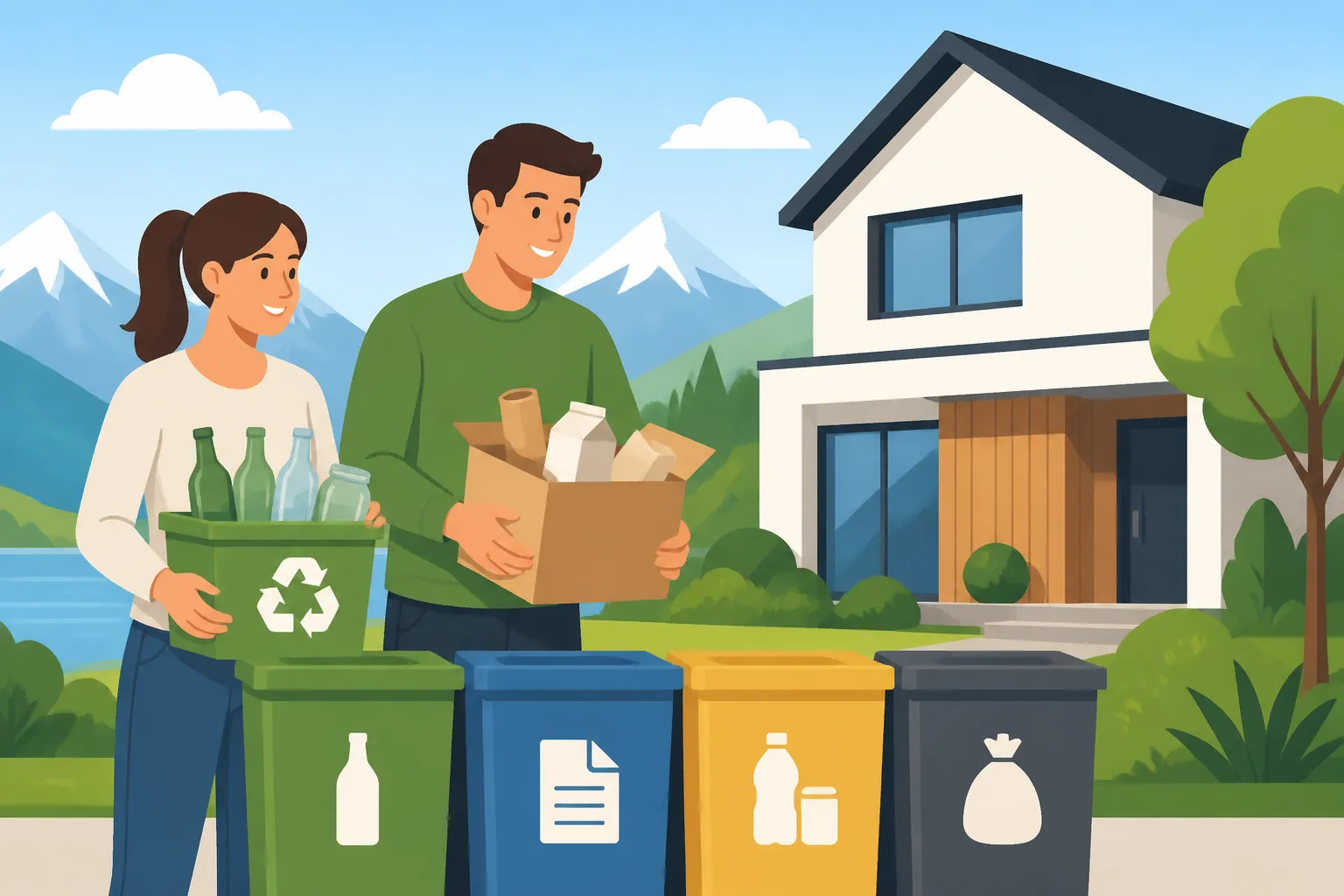
Setting Up Recycling and Waste Disposal in a New Swiss Home
You've just moved into your gorgeous new apartment in Switzerland, unpacked the boxes, and are finally starting to settle in. Then it hits you: the bewildering array of trash cans, the odd smells from your neighbors’ dedicated glass bins, and the absolute mystery of how to actually get rid of your everyday rubbish without incurring the wrath of the local Gemeinde (municipality) or, worse, your eagle-eyed Swiss neighbors. Trust me, we’ve all been there. This guide is going to walk you through the sometimes-baffling, often-frustrating, but ultimately very efficient world of Swiss recycling and waste disposal, ensuring you can navigate it like a seasoned local.
The Swiss Waste Philosophy: Why It's So Strict
It might seem like an overly complicated system when you first arrive, but there's a deeply ingrained reason behind Switzerland's stringent waste management practices. Understanding this philosophy can help frame why things are done the way they are and perhaps even ease some of your initial exasperation.
Environmental Consciousness and Resource Scarcity
Switzerland, despite its pristine image, is a small, densely populated country with limited natural resources. This geographical reality, coupled with a long-standing cultural emphasis on environmental protection, has led to a highly developed and systematic approach to waste. It's not just about keeping the Alps clean; it's about making every resource count. Unlike some countries where landfills are common, Switzerland has largely moved away from them, relying instead on incineration plants and, crucially, an incredibly high rate of recycling.
This proactive stance means that reducing waste and recycling as much as possible isn't just a suggestion; it's a societal expectation. You’ll find that environmental education starts young, and it’s something people take immense pride in. For expats, this can feel like an abrupt shift from a more lenient system. You might come from a country where all your recycling goes into one bin, or where plastic types aren't meticulously separated. Here, that level of detail is a given. It's a journey, not a sprint, to get used to it, and it’s perfectly normal to feel a bit overwhelmed trying to discern a PET bottle from a general plastic container. But ultimately, it’s all driven by a genuine commitment to sustainability and a pragmatic understanding of finite resources.
The Polluter Pays Principle (Verursacherprinzip)
At the heart of Swiss waste disposal is a fundamental concept: the "polluter pays" principle, or Verursacherprinzip. This isn't just a catchy phrase; it's the economic backbone of the entire system. Essentially, you only pay for the waste you cannot recycle. This directly incentivizes every household to reduce their general "rubbish" and maximize their recycling efforts.
How does this manifest? Through the ubiquitous and often-debated official garbage bags, known as Gebührensäcke in German-speaking regions, sacs taxés in French, and sacchi tassati in Italian. These are not just any old bin liners you pick up cheaply from a discount store. These are specific, pre-paid bags, often in a distinct color (like Zurich's blue Züri-Sack or Basel's red Bebbi-Sagg), that you must purchase from your local supermarket, post office, or commune administration. The price of the bag includes the cost of collection and incineration of its contents. This means that if you haven't meticulously separated your recyclables, you'll be paying a premium to throw away items that could have been recycled for free (or at a much lower cost at collection points).
The Verursacherprinzip extends beyond just the bags. For certain types of bulky waste, you might need to purchase specific stickers or tags to attach to items before they can be collected. This ensures that every citizen contributes to the cost of managing the waste they produce. While it might feel like an additional chore, it’s a powerful driver for the high recycling rates Switzerland achieves, and it’s why your neighbors will notice if you’re using the wrong bag or putting out overflowing bins. It’s not just a rule; it’s a shared responsibility that everyone buys into.
Your Daily Guide to Swiss Recycling: The "What Goes Where"
Okay, let's get down to brass tacks: what exactly can you recycle, and where does it all go? This is where many expats hit their first real wall, because the sheer variety and specificity can be daunting. Forget your single-stream recycling; here, precision is key.
Paper and Cardboard: Not as Simple as it Seems
You might think paper and cardboard are straightforward, right? Just toss them in a bin. Not quite in Switzerland. These are almost always collected separately, and often on different days or at different collection points.
For paper, think newspapers, magazines, advertising flyers, and office paper. This typically needs to be neatly bundled and tied with string. You'll see locals with impressive, tightly bound stacks. Some communes might have large collection containers, but more often, it's a curbside collection on specific dates, usually once a month.
Cardboard, on the other hand, is for things like cereal boxes, Amazon delivery boxes, and other packaging. Again, this needs to be flattened, bundled, and tied. The crucial distinction: no plastic coating, no greasy food residue (so, sadly, your takeaway pizza box often goes into the regular Gebührensack), and no milk or juice cartons (these are "Tetra Pak" and often have their own specific collection, or surprisingly, go into the general waste if not collected separately in your commune). Always check your local Abfallkalender for exact dates and rules regarding bundling, as fines can be issued for poorly presented paper or cardboard. You'd be amazed at the detailed rules for Recycling Paper and Cardboard: Strict Stacking and Tying Rules.
Glass and PET: Color-Coded and Cap-Free
This is probably one of the most visible forms of recycling. You'll find large collection points for glass bottles and jars, often located in supermarket parking lots, at dedicated community collection centers (Sammelstellen), or sometimes even directly in your building's shared waste area.
The golden rule for glass: it must be separated by color. You'll typically find three separate bins: white (transparent), brown, and green. If you have blue or other colored glass, it usually goes into the green bin. Before you deposit your glass, make sure to remove all caps, corks, and ceramic stoppers. Labels are generally okay to leave on, but the bottles should be empty. Think jam jars, wine bottles, olive oil bottles, but absolutely no ceramic, porcelain, lightbulbs, or window glass – those require different disposal methods.
PET bottles (polyethylene terephthalate) are another highly recycled item. These are specifically for drink bottles – water, soft drinks, juice bottles, etc., usually marked with a triangular PET symbol. They are collected separately from all other plastics. Crucially, they should be empty, rinsed (if possible), and flattened to save space, and the cap should be removed. Most major supermarkets like Migros and Coop have dedicated PET collection bins right inside their stores, making it easy to drop them off during your grocery run. Never, ever put other types of plastic, like yogurt pots or plastic bags, into the PET bins; they will contaminate the entire batch.
Aluminium and Tin Cans: The Shiny Stuff
Just like glass and PET, metal packaging also has its own destiny. Aluminium cans (think soda cans, beer cans) and tin cans (for things like canned tomatoes, pet food) are collected together in separate containers. These are usually found alongside the glass and PET bins at public Sammelstellen or sometimes at your local supermarket.
The expectation here is that these items are empty and reasonably clean. Many Swiss households have a can press at home to flatten these items, significantly reducing their volume before disposal. This isn't strictly mandatory, but it's a common practice that showcases the Swiss efficiency mindset. Again, check your local commune's Abfallkalender for exact locations and any specific preparation instructions. It's a small detail, but it makes a big difference in the recycling process.
Other Recyclables: Nespresso, Batteries, and Electronics
The Swiss commitment to recycling extends to a surprisingly wide range of items.
- Nespresso capsules: Love your morning coffee? Nespresso has a highly efficient recycling system. You can drop off your used aluminium capsules at any Nespresso boutique, or at many Post offices and other collection points. Other coffee capsule brands might have their own systems, so check their packaging.
- Batteries: Don't just toss dead batteries in the trash! All shops that sell batteries (from electronics stores to supermarkets) are legally obliged to take back used ones for free. Look for the designated collection boxes near the entrance or checkout.
- Electronics (e-waste): When your old phone, laptop, or kitchen appliance finally kicks the bucket, you can return it for free to any store that sells similar electronics. This is thanks to an "advanced recycling fee" (vorgezogene Entsorgungsgebühr, or VEG) already included in the price of new electronics. So, whether you bought your new gadget at Digitec, MediaMarkt, or even Coop City, they will take back your old one for proper disposal. This is a fantastic system that keeps harmful components out of landfills.
- Textiles and Shoes: For old clothes and shoes that are still wearable, you’ll find white or green collection containers from organizations like Texaid or Caritas scattered around communities. These items are often sorted for reuse or proper textile recycling.
- Hazardous Waste: Items like paints, chemicals, solvents, and motor oils cannot go into regular waste or even regular recycling. Small quantities can often be returned to the point of purchase (e.g., paint to a hardware store). Larger quantities or specific items might require special collection days or designated facilities. Always consult your commune's guide for these.
- Oil and Grease: Cooking oil and fat should not be poured down the drain. Many communes have separate collection points for used cooking oil, usually found near the glass and PET bins.
The Infamous Official Garbage Bags (Gebührensäcke) and Other Disposal Methods
Now we arrive at the topic that often causes the most head-scratching and mild exasperation for newcomers: the official garbage bags. As we discussed, these are central to the "polluter pays" principle.
The Gebührensack: Your Most Important Waste Item
The Gebührensack (or sac taxé) is the only type of bag in which you can place your non-recyclable household waste for collection. Using any other bag will result in your trash being left behind by the collection team, often with a polite but firm sticker explaining your transgression. And yes, your neighbors will notice.
- Where to Buy Them: You can usually purchase these bags at major supermarkets like Migros, Coop, Denner, or Aldi, as well as at local post offices and sometimes at kiosks or the commune administration itself. Just ask for "Gebührensäcke" (or "sacs taxés" in Romandie) at the checkout.
- Sizes and Costs: They come in various sizes (e.g., 17L, 35L, 60L, 110L) to accommodate different household needs. The smaller bags are more expensive per liter, encouraging even small households to recycle more. The cost directly covers the collection and incineration of the waste. You might initially balk at the price, but remember, you're paying for what isn't recycled. This is why everyone tries to cram as much non-recyclable waste as possible into them. For more details on where to buy them, check out this guide on Where to Buy Official Cantonal Garbage Bags (Gebührensäcke).
- Collection Days: General waste collection is typically once a week, often very early in the morning (we're talking 6 or 7 AM). You're usually expected to put your bag out the night before or very early on the collection day. Always consult your commune's Abfallkalender for specific days and times. And remember, overflowing bags are a no-go; the waste must fit entirely within the bag, and the bag must be tied closed.
Bulky Waste (Sperrgut) and Hazardous Materials
What about items that are too large for a Gebührensack but aren't recyclable in the usual sense? This is bulky waste (Sperrgut). Think old furniture, mattresses, large discarded toys, or construction debris from a small DIY project.
For Sperrgut, your commune will have specific rules:
- Collection Days: Some communes offer special bulky waste collection days, usually a few times a year. You'll need to purchase special stickers or tags (often available at the same places you buy Gebührensäcke) and attach them to each item.
- Bring-to Centers: More commonly, you'll need to transport bulky waste yourself to a communal recycling center (Werkhof or Sammelstelle). These centers are equipped to handle a wider range of materials, including wood, metal, construction waste, and large appliances. Access and fees vary by commune, but generally, small amounts are free or inexpensive.
Hazardous materials (like chemical cleaners, paints, solvents, certain medical waste) are highly regulated. They absolutely cannot go into regular trash or recycling bins. For small household quantities, you can often return them to the shop where you bought them (e.g., old paint to a hardware store). Your commune will also organize specific collection days or have designated drop-off points for these materials. Ignoring these rules can lead to significant environmental damage and hefty fines.
Composting and Bio-Waste: The Green Option
In many Swiss communes, especially in more residential areas or villages, there's a strong emphasis on composting and the separate collection of organic waste, often referred to as bio-waste (Grünabfall or Bioabfall).
- Separate Bins: Look for specific green or brown bins, often collected weekly or bi-weekly. These are meant for food scraps (fruit and vegetable peels, coffee grounds, tea bags, leftover cooked food), garden waste (leaves, grass clippings, small branches), and sometimes even compostable packaging.
- Private Composts: If you have a garden, you might consider setting up a private compost, which is highly encouraged.
- Check Local Rules: What exactly counts as bio-waste can differ slightly between communes, so once again, your Abfallkalender is your best friend. For instance, some communes allow meat and dairy in bio-waste bins, while others strictly forbid it. This is a fantastic way to further reduce your Gebührensack usage and contribute to sustainable practices, as organic waste is processed into compost or energy.
Getting Started in Your New Home: Practical First Steps
It's a lot to take in, isn't it? But don't worry, once you get into the rhythm, it becomes second nature. Here are some concrete steps to kickstart your Swiss waste management journey.
Find Your Local Commune's Waste Calendar
This is arguably the single most important document you need to get your head around. Every single commune in Switzerland has its own detailed waste and recycling calendar, often called an Abfallkalender, Entsorgungskalender, or Calendrier de collecte.
- Where to Find It: When you register your address at the Gemeinde or Commune upon arrival, they often provide a welcome packet that includes this calendar. If not, it will be prominently displayed on your commune's official website (just search for "[Your Commune Name] Abfallkalender"). You might also find physical copies at the post office, local library, or town hall.
- What It Contains: This calendar will list all the crucial information:
- Dates for regular trash (Gebührensack) collection.
- Dates for paper and cardboard collection.
- Locations and opening hours for glass, PET, aluminium, and other Sammelstellen.
- Details on bulky waste collection days and how to obtain stickers.
- Information on bio-waste, hazardous waste, and other special collections.
- Contact information for your local waste department.
Trust me, this calendar is your Bible. Pin it to your fridge, save it as a PDF on your phone, or bookmark the webpage. Using a mobile app to manage things, perhaps after getting your local SIM card sorted with a provider like Airalo, can also be a game-changer for digital calendars and notifications.
Essential Shopping for Your Recycling Hub
Once you have your calendar, it's time to set up your home for success. You’ll need a few key items to make daily recycling efficient and less of a chore.
- Dedicated Bins: Invest in a set of small, clearly labeled bins for inside your home. One for glass, one for PET, one for aluminium/tin, and one for paper (if you collect it indoors before bundling). This keeps everything separated as you use it, preventing cross-contamination and making trips to the Sammelstelle much quicker. IKEA, Coop Bau + Hobby, or even local homeware stores will have suitable options.
- The Gebührensäcke: Make sure you have a roll of the official garbage bags for your commune. Don't wait until your current bag is full to realize you don't have any; always keep a spare. You can pick these up at your local Migros or Coop.
- String/Twine: For bundling paper and cardboard, a good roll of sturdy twine is indispensable.
- Can Press (Optional but Recommended): If you consume a lot of canned goods, a can press can be a surprisingly satisfying purchase that saves a lot of space in your recycling bags.
Setting up a small "recycling station" in your kitchen or utility room will streamline the process immensely. It’s all about creating habits early on. If you've just moved with a relocation service like Sirelo, they might even provide some initial guidance on these local quirks.
Ask Your Neighbors (Carefully!)
While Swiss people are generally private, they are also sticklers for rules, especially when it comes to shared spaces and community standards like waste disposal. This means that while you might be afraid of looking ignorant, your neighbors can actually be an invaluable (if sometimes intimidating) source of hyper-local information.
Don't be shy, but approach the topic politely. If you see a neighbor putting out their rubbish, a simple "Entschuldigen Sie, ich bin neu hier und versuche, das Abfallsystem zu verstehen. Wann werden die Papiersäcke abgeholt?" (Excuse me, I'm new here and trying to understand the waste system. When are the paper bags collected?) can go a long way. Most will appreciate your effort to conform and will be happy to share their knowledge. They might even offer tips on where the nearest glass collection point is or explain a particularly obscure rule for your building.
It's natural to feel a bit exposed when you're learning new rules under the implicit gaze of your community. But remember, they were all new once too, even if it was generations ago! Taking the initiative shows respect for their system and helps you integrate faster.
Swiss Recycling & Waste Disposal Quick Guide
| Waste Type | Disposal Method | Key Rules & Tips |
|---|---|---|
| General Waste | Official Gebührensack (pre-paid bag) | Must use specific commune-issued bags. Only non-recyclable items. Empty & tied. |
| Paper | Communal collection (dates vary) | Bundled, tied with string. No plastic coating, no dirty items. |
| Cardboard | Communal collection (dates vary) | Flattened, bundled, tied with string. No plastic coating, no dirty pizza boxes. |
| Glass | Sammelstelle (collection point) | Sorted by color (white, brown, green). Caps/lids removed. Empty. |
| PET Bottles | Supermarket bins, Sammelstelle | Only drink bottles (look for PET symbol). Flattened, cap removed. Empty. |
| Aluminium & Tin Cans | Sammelstelle | Empty, clean. Often collected together. Flattening encouraged. |
| Nespresso Capsules | Nespresso boutiques, Post offices | Dedicated collection. Ensure capsules are empty. |
| Batteries | Any shop selling batteries | Free return at point of sale. |
| Electronics (E-waste) | Any shop selling similar electronics, Werkhof | Free return at point of sale for proper recycling (VEG included in new purchases). |
| Textiles & Shoes | Texaid/Caritas containers | Only clean, wearable items. |
| Bio-waste | Commune-specific bio-bins | Check local rules for acceptable items (food scraps, garden waste). |
| Bulky Waste | Special collection days or Werkhof | Requires specific stickers/tags or transport to recycling center. |
| Hazardous Waste | Special collection events, return to point of sale | Never in regular trash. Consult commune for specific disposal methods. |
Disclaimer
The information provided in this guide is intended for general informational purposes only and is based on common practices across Switzerland. Waste disposal and recycling rules can vary significantly between cantons and even individual communes. While every effort has been made to ensure accuracy, readers are strongly advised to consult their specific local commune's official Abfallkalender or website for the most precise and up-to-date regulations applicable to their residence. This guide does not constitute legal advice.