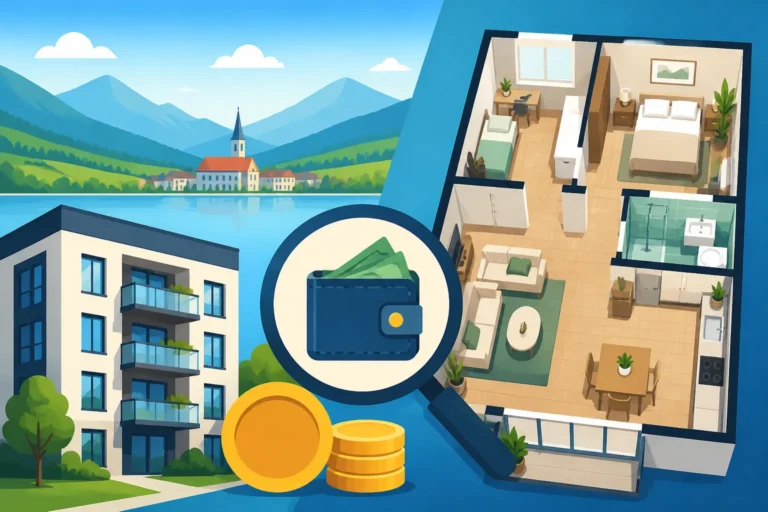
Does a 3.5 Room Apartment Include a Kitchen? Swiss Room Counting
Navigating the Swiss real estate market often feels like trying to solve a complex riddle where the numbers simply do not add up to a logical conclusion. I remember vividly the first time I stared at a listing for a 2.5-room flat in Zurich, wondering if I would be forced to sleep in a hallway or if the kitchen was merely a suggestion. This guide clarifies exactly how the Swiss count rooms so you can avoid the heartbreak of visiting a closet that was advertised as a home.
The Logic of Swiss Room Counting: Why the Kitchen Does Not Count
One of the most jarring realizations for any expat moving to Switzerland is that the number listed on a rental advertisement does not represent the total number of distinct walled-off spaces in the apartment. In many countries, you count "bedrooms." In others, you count every single room including the kitchen. Switzerland, however, follows its own rhythmic logic that prioritizes "living spaces" over utility zones.
In the Swiss system, kitchens, bathrooms, and separate toilets are considered a standard given. They are essential infrastructure and, therefore, are not included in the room count. When you see a 3.5-room apartment, the "3" refers to the rooms you actually live, sleep, or work in. Usually, this translates to one living room and two bedrooms. The "0.5" is where things get truly interesting and often where most of the confusion for newcomers begins.
When I first arrived and started Decoding Swiss Apartment Ads: What 2.5, 3.5, and 4.5 Rooms Actually Mean, I was baffled by the price jumps between a 3-room and a 3.5-room place. I assumed the 0.5 was perhaps a large walk-in closet or a pantry. In reality, that half-room is almost always a dedicated dining area or an exceptionally large hallway that connects the kitchen to the living room. It is a space large enough to fit a dining table and chairs, effectively functioning as a separate zone even if it doesn't have four walls and a door.
What Exactly Defines a Full Room?
In a Swiss context, a "full room" (the whole number in your 3.5) must meet specific legal and architectural requirements regarding size and natural light. Generally, a room is counted if it is a bedroom or a living room. It must have a window and, in most cantons, must be at least 10 to 12 square meters to be legally considered a habitable room.
If you are Finding an Apartment in Zurich: Relocation Agents vs Flatfox vs Homegate, you will notice that the living room is always counted as one of these full rooms. Unlike the US or UK, where you might search for a "two-bedroom apartment," in Switzerland, you are searching for a "3-room apartment" to get that same layout. It is a mental shift you have to make early on, or you will spend weeks looking at 2-room apartments only to realize they are actually one-bedroom flats.
The Mystery of the Half-Room
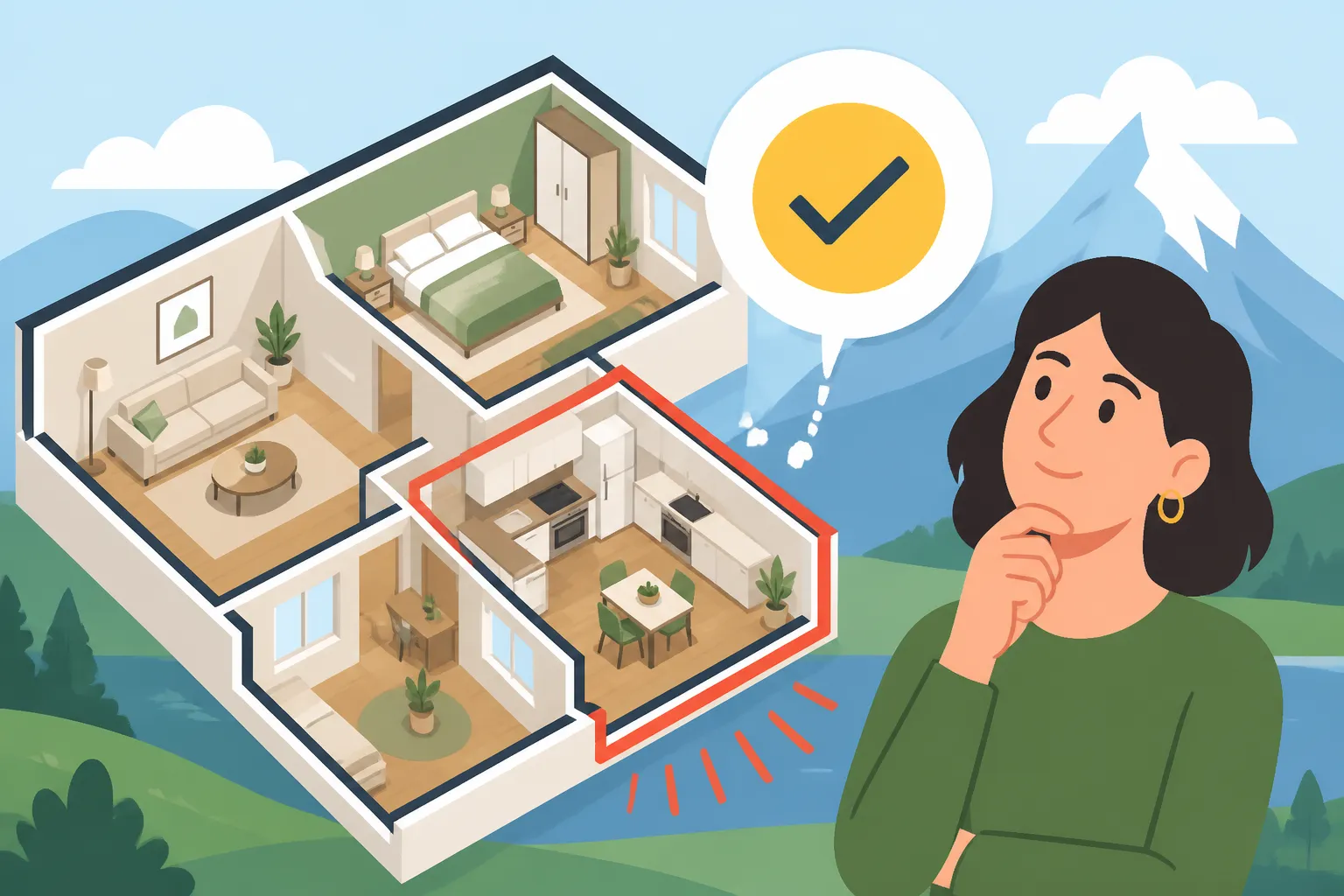
The "0.5" is the Swiss way of adding nuance to a floor plan. It signifies a space that provides extra utility but doesn't quite qualify as a closed-off bedroom. Most commonly, in a 3.5-room apartment, the kitchen is open-plan and flows into a dining alcove. That alcove is your 0.5.
However, in older buildings, particularly when you are weighing the Altbau vs Neubau: Pros and Cons of Historic Swiss Apartments, the 0.5 might be a very wide entrance hall where the previous tenants likely tucked a desk or a bookshelf. It is vital to look at the square meters (m²) listed alongside the room count. A 3.5-room apartment of 95m² is a very different experience from a 3.5-room apartment of 70m². The room count tells you the layout, but the square meters tell you the reality.
Visualizing the 3.5-Room Apartment: Layouts and Expectations
To truly understand if a 3.5-room apartment fits your lifestyle, you need to visualize the daily flow of a typical Swiss floor plan. For a couple moving here, this is often the "sweet spot" of housing. It provides enough space for a master bedroom, a guest room or home office, and a communal living area.
When you use platforms like HousingAnywhere to browse listings, you will see that the 3.5-room configuration is incredibly popular among expats. It allows for that extra bit of breathing room that makes the high cost of Swiss rent feel slightly more justifiable. But let’s break down exactly what you are getting when you sign that lease.
The Kitchen and Dining Reality
Yes, your 3.5-room apartment absolutely includes a kitchen. In Switzerland, it is legally required for a rental unit to have a functioning kitchen and at least one bathroom. Unlike in some parts of Germany, where you might be expected to bring your own kitchen cabinets and sink (a concept that still gives me nightmares), Swiss apartments come with fully fitted kitchens.
In a 3.5-room setup, you can expect:
- A stove and oven (often high-end brands like V-ZUG or Miele).
- A refrigerator and usually a small freezer compartment.
- A dishwasher (standard in almost all 3.5-room flats and above).
- The "half-room" space usually attached to the kitchen for your dining table.
If the kitchen is particularly large and has enough space for a table within the four walls of the kitchen itself, the landlord might still label it as a 3.5-room apartment to highlight that eat-in capability.
The Master Bedroom and the Extra Space
In this configuration, you will have two closed rooms. One is typically larger, intended as the master bedroom. The second room is often slightly smaller. For many expats, this second room becomes the "Zoom room." With the rise of remote work, having a 3.5-room flat has become almost a necessity for those who don't want to work from their dining table.
While you are setting up your new life, staying connected is the first hurdle. I always recommend getting a local data solution like Airalo immediately upon landing so you can navigate to viewings without hunting for public Wi-Fi. Once you are in that extra room, you will realize that the "half-room" dining area keeps your living room from feeling cluttered with office gear or dining furniture.
| Room Count | What it Usually Means | Best For |
|---|---|---|
| 1.0 Room | Studio apartment (living/sleeping in one room) | Singles/Students |
| 1.5 Rooms | Studio with a large separate kitchen or alcove | Singles on a budget |
| 2.0 Rooms | 1 Living room, 1 Bedroom | Couples or singles |
| 2.5 Rooms | 1 Living room, 1 Bedroom, 1 Dining area | Couples wanting more space |
| 3.0 Rooms | 1 Living room, 2 Bedrooms | Small families or 2-person WG |
| 3.5 Rooms | 1 Living room, 2 Bedrooms, 1 Dining area | Professionals working from home |
| 4.5 Rooms | 1 Living room, 3 Bedrooms, 1 Dining area | Families with children |
Navigating the Application and Move-In Process
Understanding the room count is only half the battle; the other half is actually winning the apartment. The competition in cities like Zurich, Geneva, and Basel is fierce. You will often find yourself at a "Massengruppentermin" (mass viewing) with 50 other people all eyeing the same 3.5-room gem.
To stand out, you need a flawless dossier. This is where many foreigners stumble. You will need your permit, your salary slips, and most importantly, your "Betreibungsauszug" (debt register extract). If you are new to the country, Applying for an Apartment Without a Debt Register Extract can be a major hurdle. You’ll need to prove your solvency through your work contract and perhaps a larger deposit.
Essential Infrastructure for Your New Home
Once you’ve successfully navigated the bureaucracy and secured your keys, the real work begins. Swiss apartments are often handed over completely empty—no light fixtures, just wires hanging from the ceiling. You will spend your first week at IKEA or ordering essentials from Amazon Germany to get the place habitable.
You should also be aware of the Rental Deposits: Traditional Bank Accounts vs Guarantee Insurances. Landlords typically require three months of rent as a deposit. If you don't want to tie up CHF 6,000 to CHF 9,000 in a blocked bank account, services like SwissCaution or Firstcaution allow you to pay an annual fee instead. This is a lifesaver for expats who need that cash for initial furniture runs or the Cost of Living Realities: Groceries, Telecoms, and Household Expenses that hit you in the first month.
Integration and Etiquette
Living in a 3.5-room apartment in a Swiss residential building comes with its own set of cultural "rules." You are likely sharing a building with long-term Swiss residents who value peace and order. This is where you must learn about Swiss Everyday Rules: Recycling, Quiet Hours, and Neighborhood Etiquette.
For instance, your 3.5-room flat likely doesn't have its own washing machine. Most Swiss apartments share a "Waschküche" (laundry room) in the basement with a strict schedule. If it is your day to wash, it is your day. If it isn't, don't even think about touching those machines. And remember, Sunday is a "quiet day"—no vacuuming, no loud music, and definitely no drilling holes in the walls of your new 0.5-room dining nook.
Maximizing Your Swiss Living Experience
Ultimately, choosing a 3.5-room apartment is about more than just the number of walls; it is about creating a functional home in a country that values high-quality, efficient living. While the prices may seem eye-watering at first, the standard of maintenance and the quality of the appliances usually surpass what you would find in other major global hubs.
Before you sign the lease, I highly recommend that you join The ASLOCA / Mieterverband: Why Every Swiss Tenant Must Join. They are the tenant's association, and for a small annual fee, they provide legal protection and advice. If your landlord tries to unfairly increase the rent for your 3.5-room flat or if there’s a dispute about the "half-room" condition, they are your best allies.
Don't forget the administrative tail-end of moving. You must Registering Your Address at the Kreisbüro Within 14 Days of Moving. Switzerland is a country of precision, and missing this deadline can lead to annoying fines. Once that is done, you can finally sit back in your 3.5-room sanctuary, look out at the Alps or the Limmat, and realize that while the counting system is strange, the life it facilitates is pretty spectacular.
Disclaimer
The information provided in this guide is for general informational purposes only and does not constitute legal or professional real estate advice. Rental laws and room counting standards can vary slightly by canton and are subject to change. Always review your specific lease agreement with a qualified professional or the Swiss Tenants' Association (ASLOCA/Mieterverband) before signing.